Lap siding
Clapboard, or lap siding, is boards in overlapping horizontal rows, each beveled thin at the top and thick at the butt. Water sheds over the laps, so the failure points are the bottom edges and the cut ends.

Carlsbad Expert Painting is San Diego County's trusted specialist in wood siding painting in Carlsbad, CA, specializing in T1-11 panel siding, hardboard lap siding and board and batten. We offer swollen board replacement and edge sealing on plywood and hardboard.
Our team provides oil-alkyd primer on every cut end and butt joint, delivering painting that builds a full film and seals the siding against water for both residential and commercial projects. The crew that probes your siding board by board is the crew that paints it, and we write a scope naming each repair, the primer and the number of coats before any painting begins.
From replacing the swollen bottom edge of a panel to the final coat over sealed butt joints, our team handles every detail. Serving Carlsbad, Encinitas, Solana Beach and Del Mar, we keep the water out of wood siding.
Why Carlsbad Expert Painting
No salesperson hands you to a stranger. The person who measures the job answers for it.
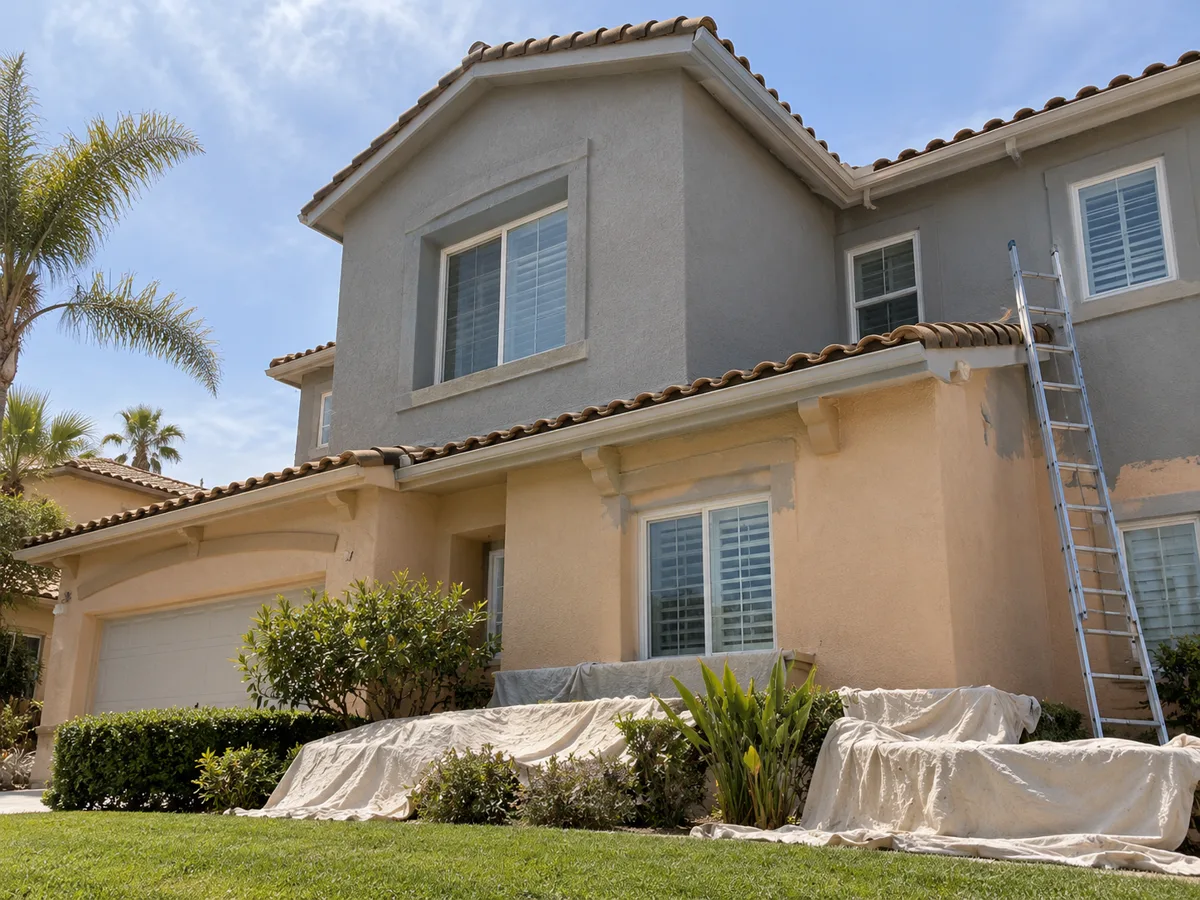
Stucco is the common exterior in California, so wood siding in Carlsbad tends to show up on gables, garage walls, bands under a roofline, and houses that were built with it. Which kind it is decides how it is repaired and finished.
Clapboard, or lap siding, is boards in overlapping horizontal rows, each beveled thin at the top and thick at the butt. Water sheds over the laps, so the failure points are the bottom edges and the cut ends.
Vertical boards with narrow strips over the joints. The battens hide the seams, and also hold water if their edges are left unsealed.
Texture 1-11 is plywood sheet siding grooved to imitate vertical boards. It goes up fast, and it fails in ways boards do not.
Hardboard is high-density fiberboard made of compressed wood fibers. It is used as siding, usually factory primed, and its edges are the vulnerable part.
Wet and dry cycles do the damage. Plywood is peeled from a log, so the face carries tiny lathe checks, and repeated wetting and drying makes those checks travel to the surface. That is face checking, and it can show through and even extend through a coat of paint. A thin coat over a checked panel looks fine for a season and then shows every line again.
Hardboard edges absorb water. A swollen bottom edge on a hardboard board is the signal that it is done, and that board is replaced, not painted over. A lap board can go the same way when moisture gets behind it, which is why we probe siding with an ice pick during the walk. Sound wood resists the point. Decayed wood lets it in, and the board is marked for replacement.
A repaint can save wood siding that is only weathered. It cannot save wood that has rotted through, and we tell you which is which before the estimate is written.
On siding, paint fails first where water can wick into wood, and that is end grain: the cut ends of boards, butt joints, the bottom edge of each course and any place siding meets a roof. Unsealed end grain drinks water like a bundle of straws. So every cut end and panel edge is painted with an oil-alkyd primer before the topcoat. That includes the edges of plywood panels such as T1-11. Where siding runs into a roof, there should be a gap between the siding end grain and the roof shingles, because end grain that touches shingles cannot be painted and it decays.
Caulk is a seal, not a flashing. Siding above Z-flashing sits over it to form a drip edge, and we point out any place where caulk is being asked to do a flashing's job.
When boards are replaced, the back face gets a stain-blocking primer before installation. Back-priming slows water absorption and helps reduce cupping in flat-grain boards.
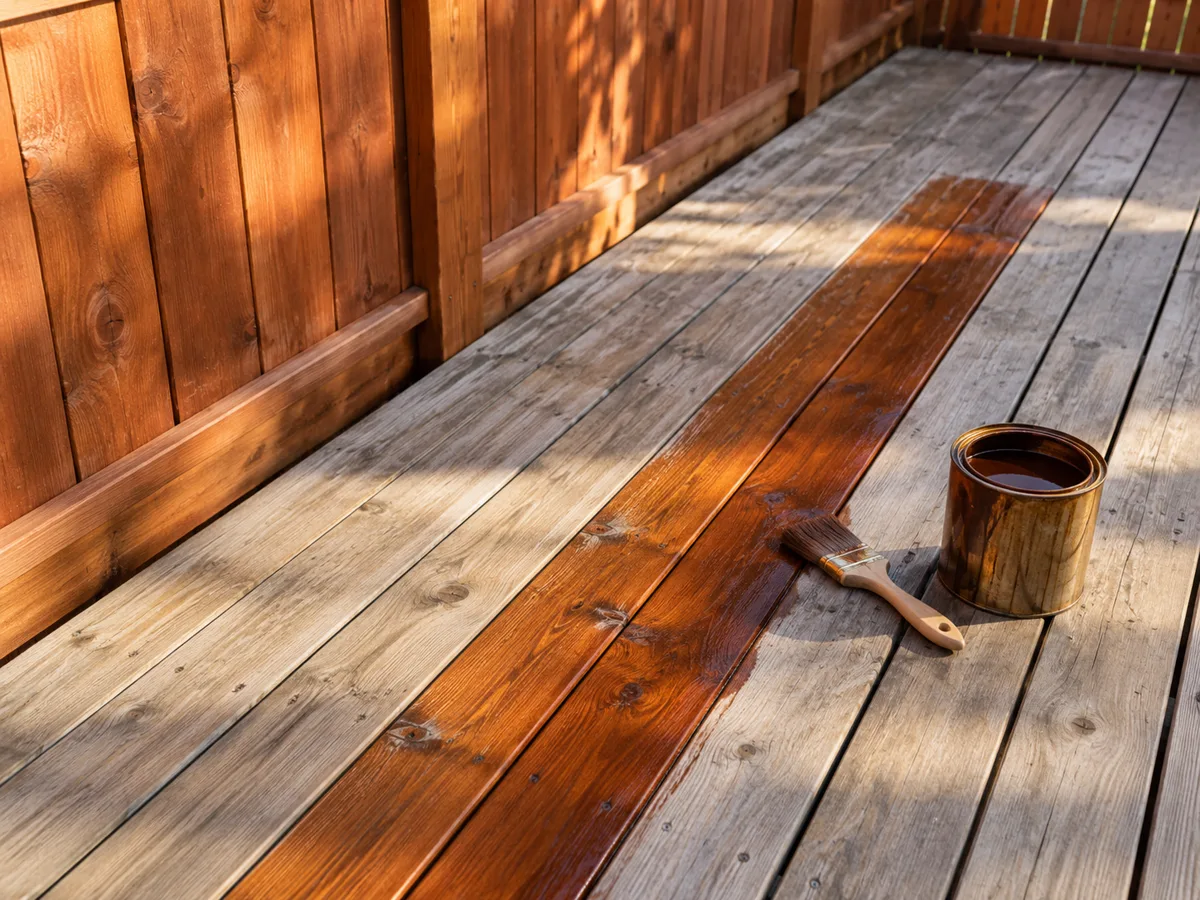
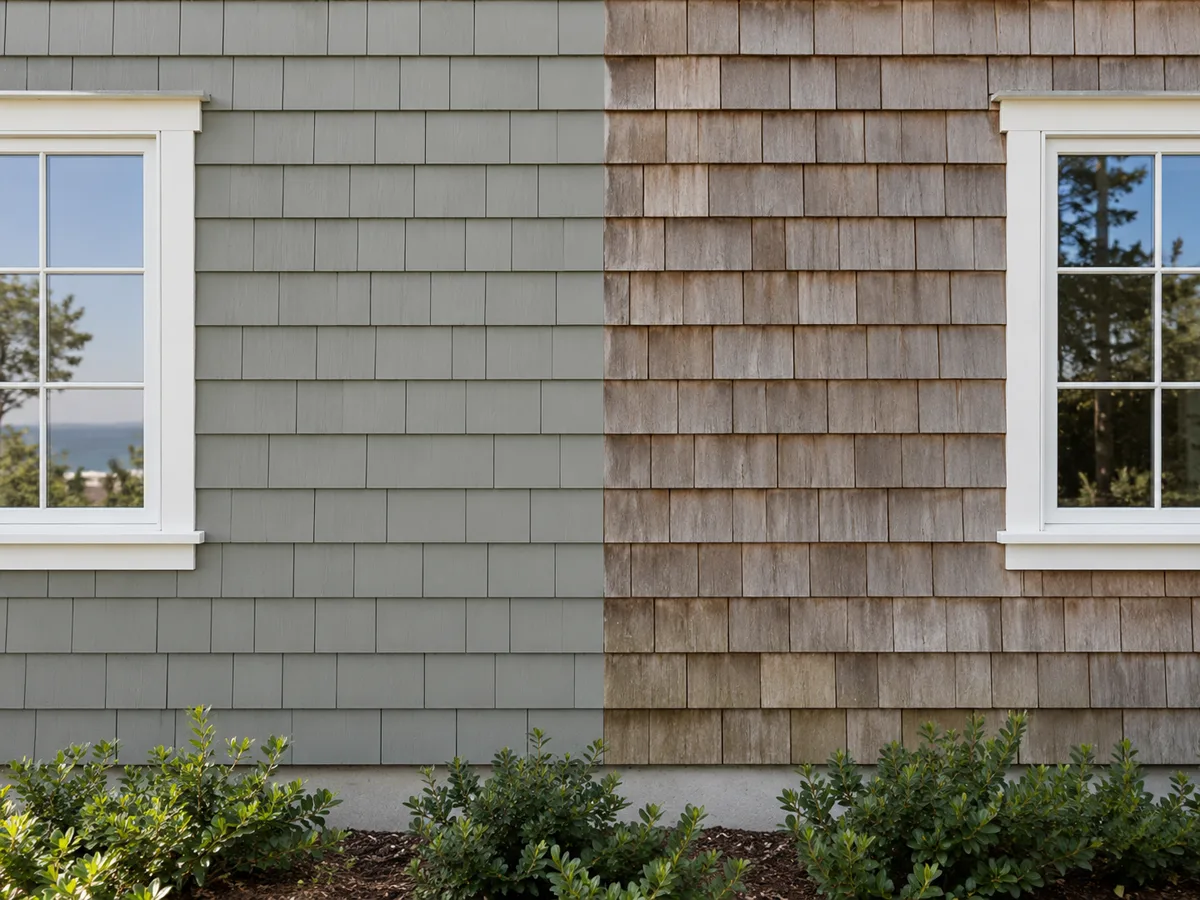
On wood siding that is being kept under a film, the choice is between paint and a solid-color stain. Both form a film and both are sold in the same colors. Paint has more solids, so it builds a thicker film and generally gives the longest service. A solid-color stain performs like paint and can be applied over an existing painted surface.
Not every finish belongs on every siding. Semitransparent stains and water-repellent preservatives are not suitable for hardboard, which takes paint or a solid-color stain. Saw-textured plywood like T1-11 can take an oil semitransparent stain, a solid-color stain or paint, but the checks in its face mean a full film is the lasting option.
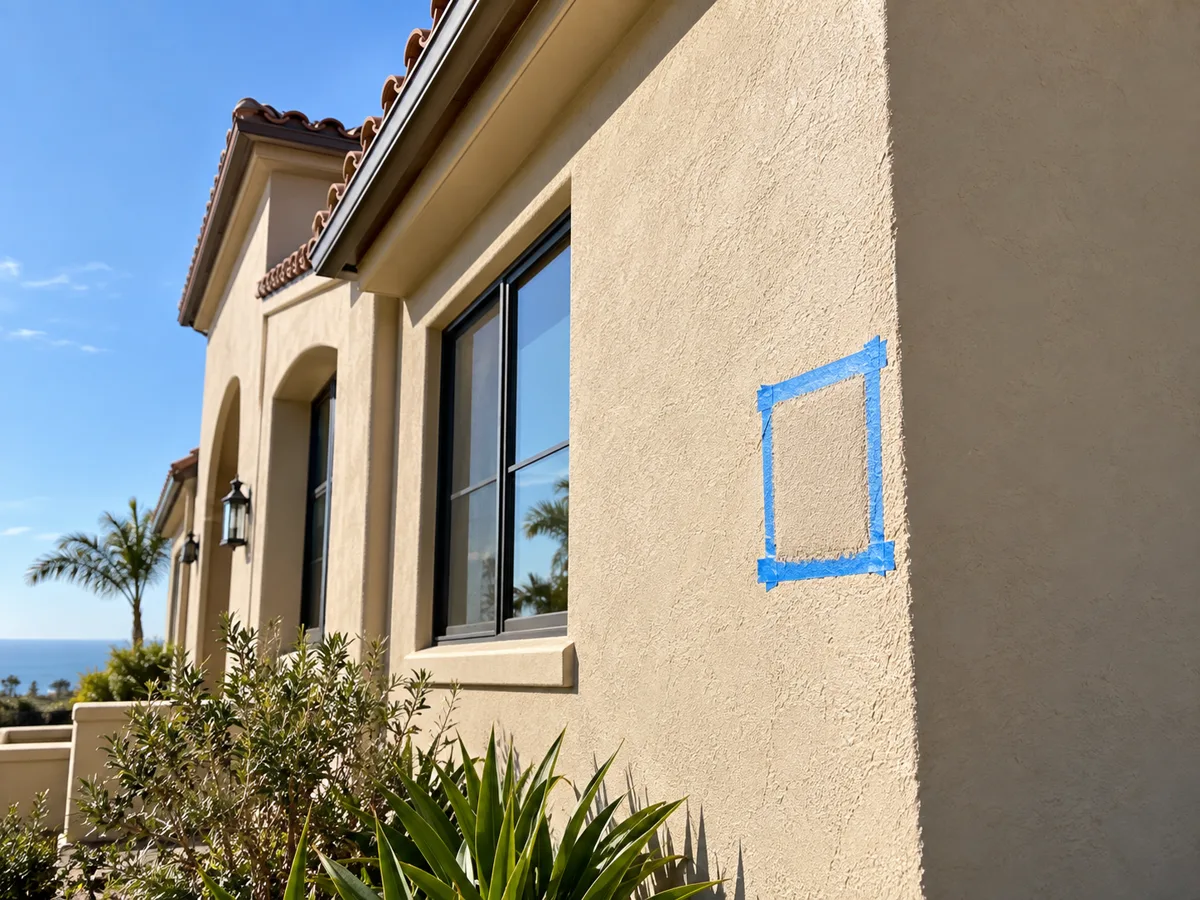
We recommend by siding type, in the written scope, and we brush samples on a hidden section of your own wall.
Where wood siding sits on an association's buildings, we submit product data and paint a mockup on one elevation for board approval. Send the building count or reserve study and we will price it from a survey of the siding, elevation by elevation.
The process
We go over the siding board by board, probe for soft wood, and mark swollen edges, checked panels and loose fasteners.
Rotted boards and swollen panels are cut out and replaced, and loose panels are re-nailed with corrosion-resistant fasteners.
Old, loose paint is scraped and sanded back, and face-checked panels are smoothed and filled where it will help.
Every cut end, butt joint and panel edge takes oil-alkyd primer, and bare wood is primed before the finish.
Paint or solid-color stain goes on as a full film, brushed and rolled into the grooves and laps, with the number of coats written in the scope.
We walk each elevation with you and complete the punch list before the job closes.
Wood siding painting and repair in Carlsbad is typically estimated at roughly $6,000 to $20,000 for a whole wood-clad house. Smaller jobs, such as a gable or a garage wall, fall below that range. The price is driven by:
These figures are estimates and can change after the siding is probed. The written quote you receive once the siding has been probed sets the final price.
Service area
Questions
Weathered and face-checked T1-11 can usually be sanded, sealed at the edges and given a full paint film. Panels that are rotted or swollen through are replaced. We probe them on the walk and mark which is which.
Semitransparent stains and water repellents are not suitable for hardboard. It takes paint or a solid-color stain.
The lowest edge sits nearest to splash, sprinklers and wet ground, and unsealed edges take up water. A swollen hardboard edge means that board should be replaced and every edge sealed.
It is the cut end of a board, where wood absorbs water fastest. We seal every cut end, butt joint and panel edge with oil-alkyd primer before the topcoat.
Both form a film. Paint builds a thicker one and generally lasts longest, while solid-color stain can go over existing paint. We recommend by siding type in your written scope.
Individual boards and panels where the damage is local. A wall is only replaced when the decay is spread across most of it, and we mark that on the walk so the estimate reflects it.
Not on its own. Caulk is not flashing, and siding should keep a gap above roofing so the end grain stays dry. We flag those spots on the walk.
A whole wood-clad house is typically estimated at roughly $6,000 to $20,000, depending on repairs and area. Your written quote sets the final price.
Homeowners get a free on-site estimate. Boards, managers and contractors can send a scope for a bid.
Licensed, insured and bonded · License #585047. Calls only, we do not receive text messages.