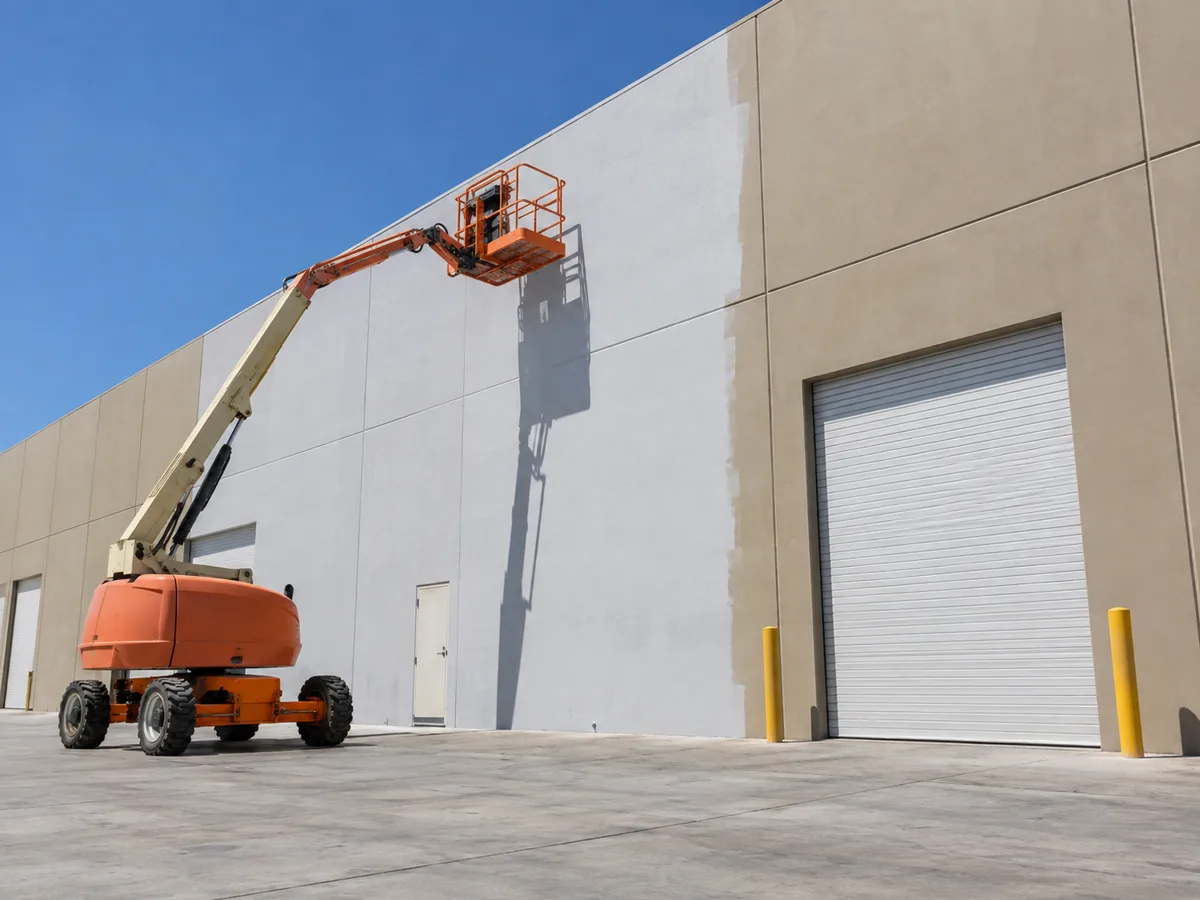
One schedule per plan and elevation
Body, trim, accent, garage and front door colors are listed for each elevation and tied to the lot map, so a crew on site can check the schedule against the lot number instead of guessing.

Carlsbad Expert Painting is San Diego County's trusted specialist in new construction painting in Carlsbad, CA, specializing in new drywall, new stucco exteriors and production-phase interiors. We offer per-plan pricing and trade-sequenced painting schedules.
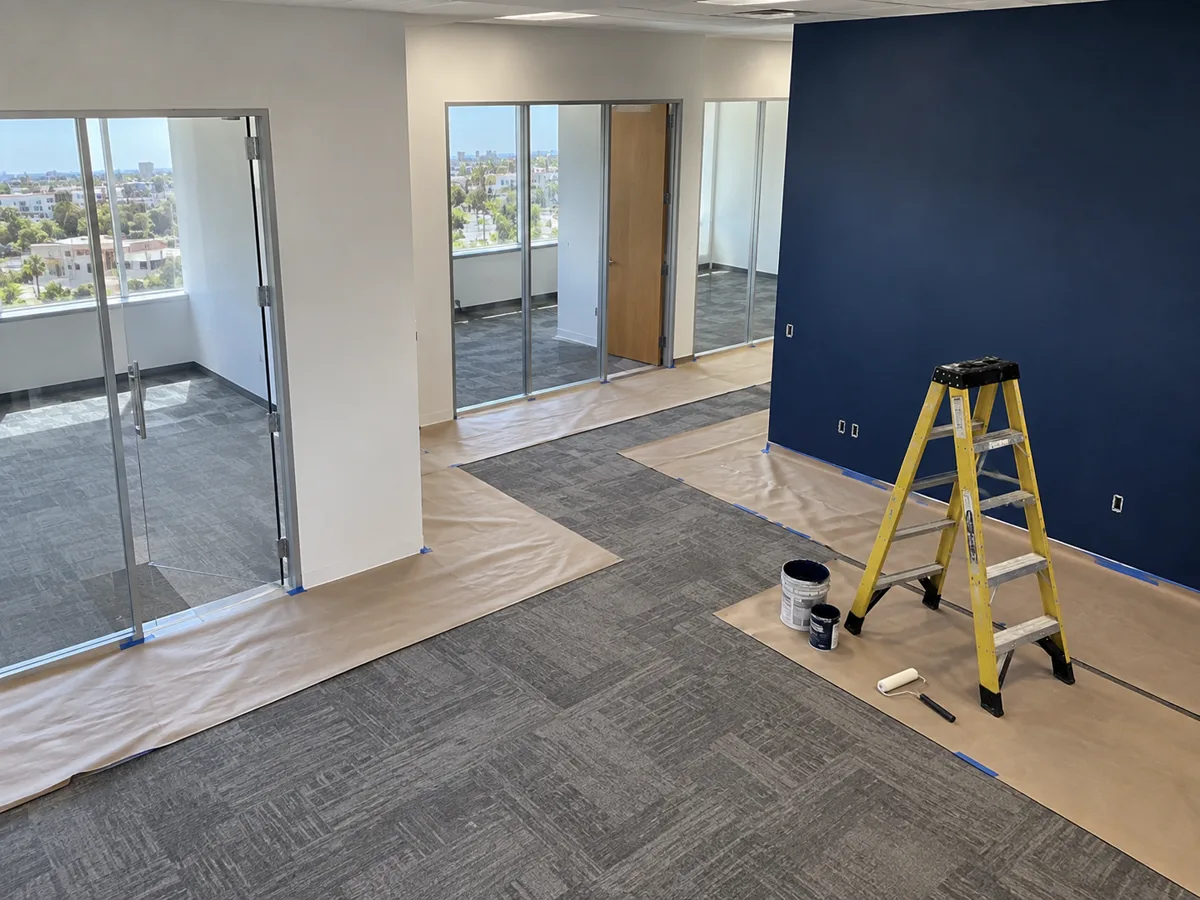
Our team provides prime, finish and touch-up passes, delivering painting that leaves homes ready for the closing walk for both residential and commercial projects. We write the scope plan by plan with the primer and the coats named, we sample the palette on the first house for the superintendent to approve, and the crew that paints a plan's first home is the crew that paints its repeats.
From primed drywall and cured stucco to the last touch-up before the buyer walk, our team handles every detail. Serving Carlsbad, Harmony Grove and Fairbanks Ranch, we match our crews to the superintendent's schedule instead of asking the builder to match ours.
Why Carlsbad Expert Painting
No salesperson hands you to a stranger. The person who measures the job answers for it.
A production builder does not budget a phase house by house. A superintendent budgets by plan, then multiplies by the number of lots that plan occupies. Our bids follow that logic: each plan gets its own scope and its own price, and the price repeats across every lot of that plan.
Wall area, ceiling area, stories, trim and door counts and the exterior elevation options are counted once and written down. A repeat lot is the same scope with a lot number on it.
When a plan comes in more than one elevation, the base price is the plan and each elevation is a separate adder, so the superintendent can see what a color or trim change does before it is ordered.
Buyer upgrades such as accent walls or extra colors are itemized against the plan, not folded into the base number.
The result is a budget that a superintendent can read from one page and a schedule that repeats. Because the scope for a plan does not change from lot to lot, our crews learn the plan's details and the punch list shortens with each repeat.
Construction management is the discipline of controlling a project's scope, time, cost and quality, and on a production phase the painter sits between several other trades. Paint arrives after the surfaces exist and before the finishes that can be damaged by it, and then returns once the other trades have left their marks.
We take the schedule from the superintendent and ask for a lookahead by lot. In return we mark each lot's status as primed, finished or touched up, so the superintendent sees paint progress at a glance and the buyer walk is booked against the real state of the house.
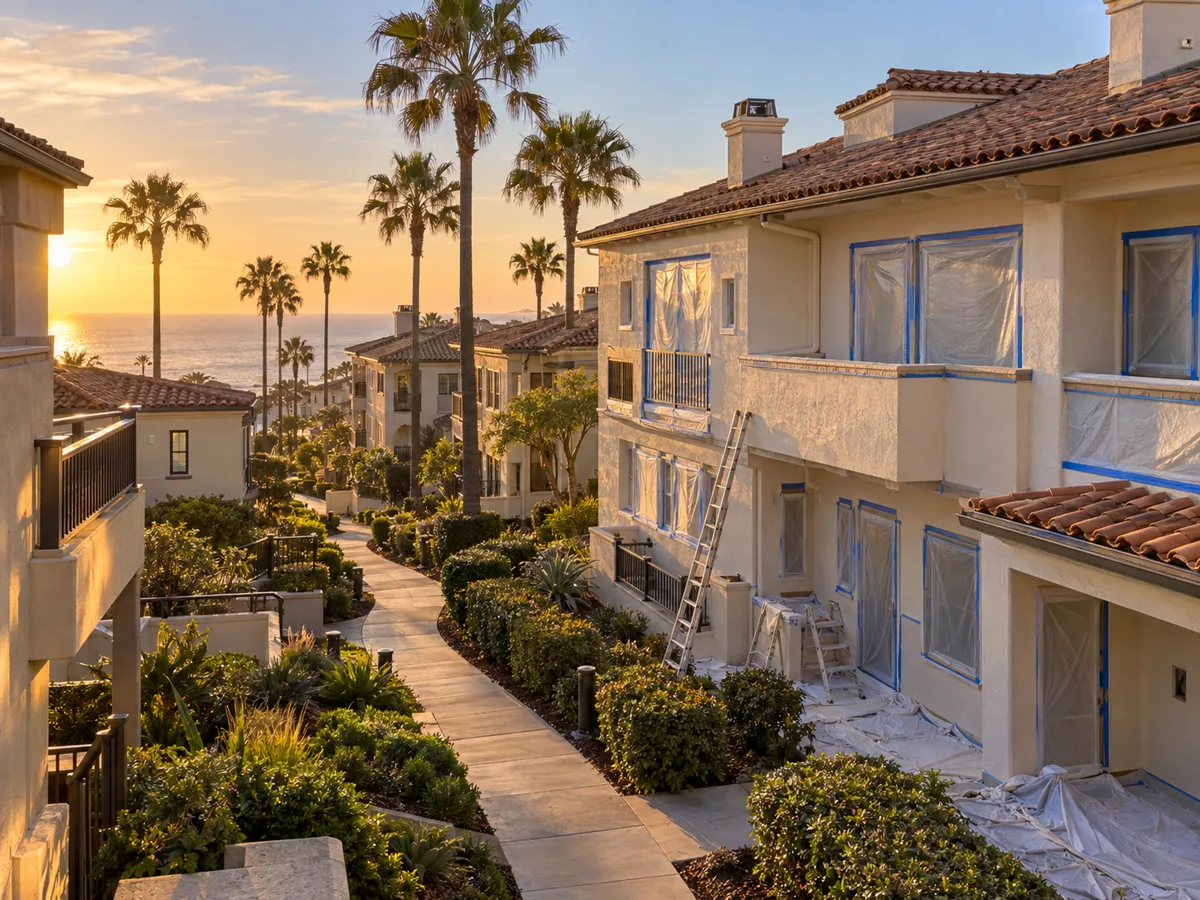
A phase with a few plans and several elevations quickly becomes dozens of color combinations on paper, and a wrong one on a house is an expensive mistake. The color schedule is the document that prevents it.
Body, trim, accent, garage and front door colors are listed for each elevation and tied to the lot map, so a crew on site can check the schedule against the lot number instead of guessing.
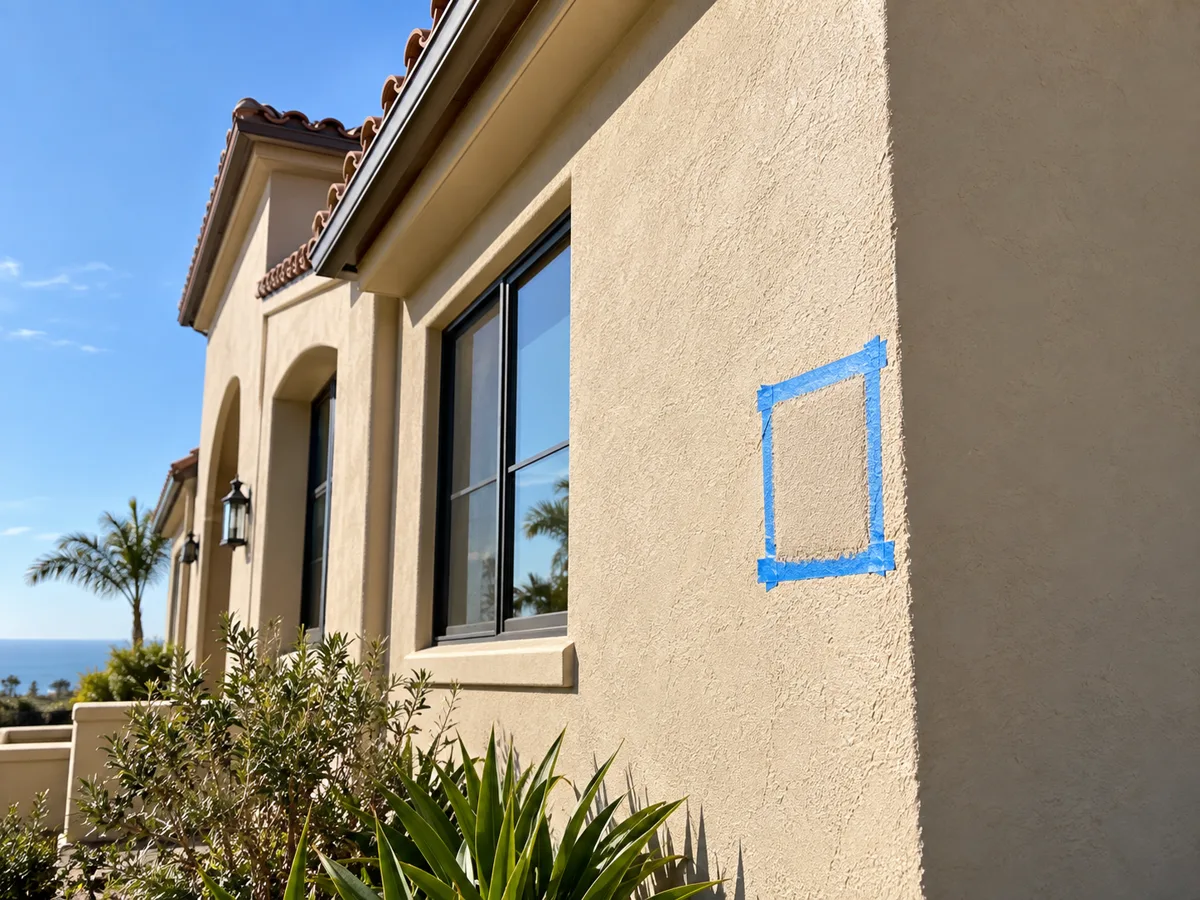
We paint samples on the first house of a plan for the superintendent to approve, so nothing is repeated across a street until one finished house has been accepted.
When a builder rotates a palette, the change is written into the schedule with the lot where it starts, and leftover paint from the old palette is labeled and set aside. The schedule travels with the plan file into closeout, so warranty touch-ups later are matched to the color the house was actually painted.
The two substrates behave differently, and the sequence follows the substrate, not the calendar.
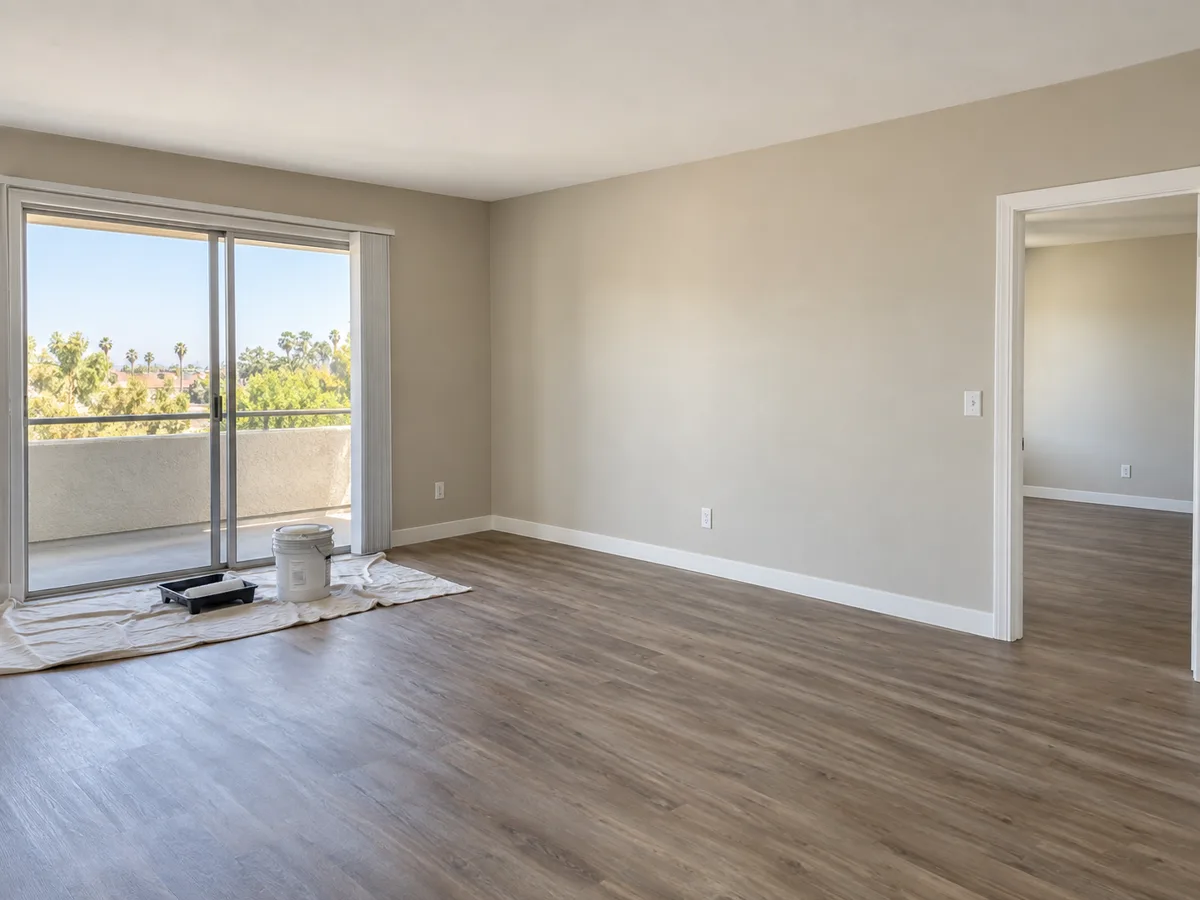
Drywall is a gypsum panel between sheets of facer paper, used for interior walls and ceilings, and it drinks paint unevenly where joint compound meets the paper. A primer coat goes on before finish coats so that the joints, the paper and the patched fasteners take the finish at the same rate and the sheen is even.
New stucco can have an alkalinity as high as 13, and the level falls as the lime binds during cure, which needs moisture. Manufacturers generally advise against painting stucco with too high a pH unless a high-pH-resistant primer is used, because the coating can burn, showing a dulled sheen or mottling. There is no single number of days that applies to every wall, so we go by the product data and by testing, not by a date on a calendar.
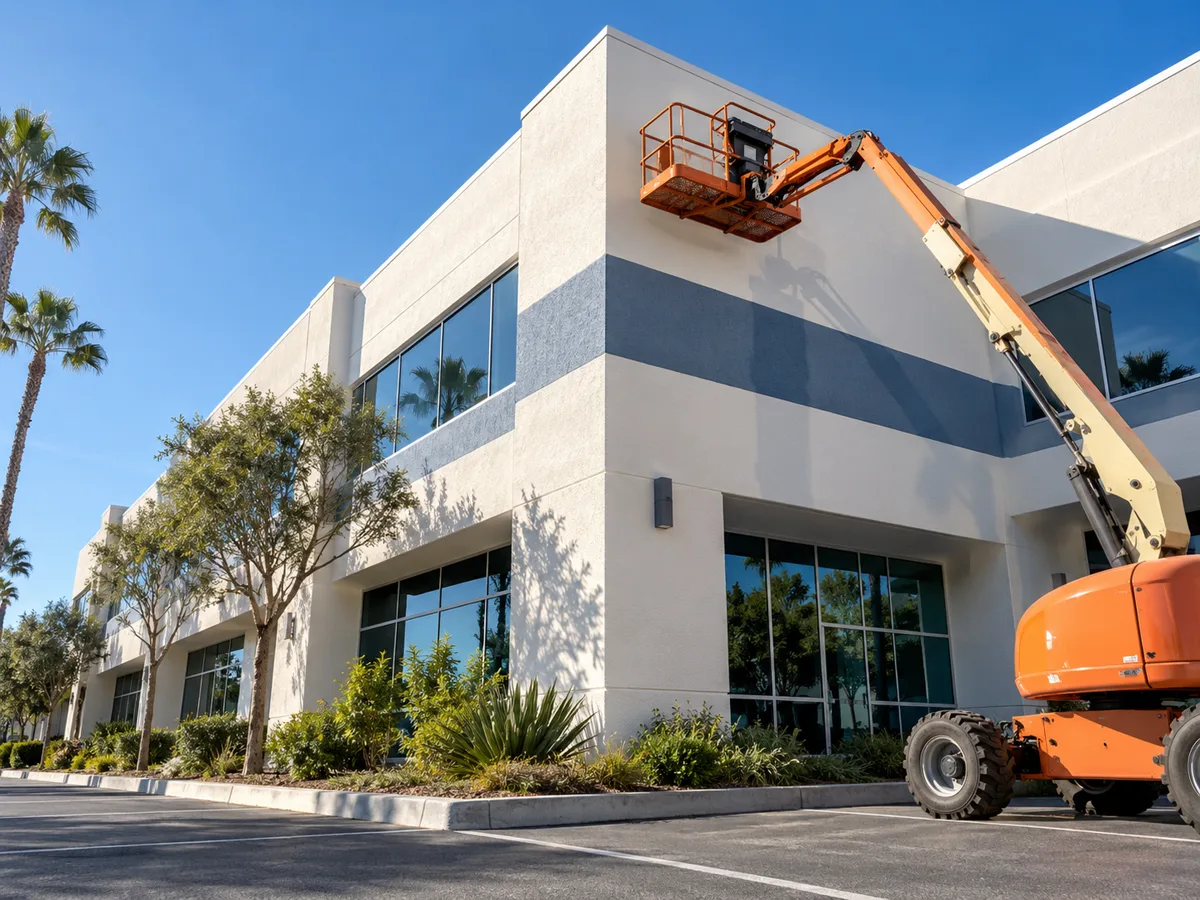
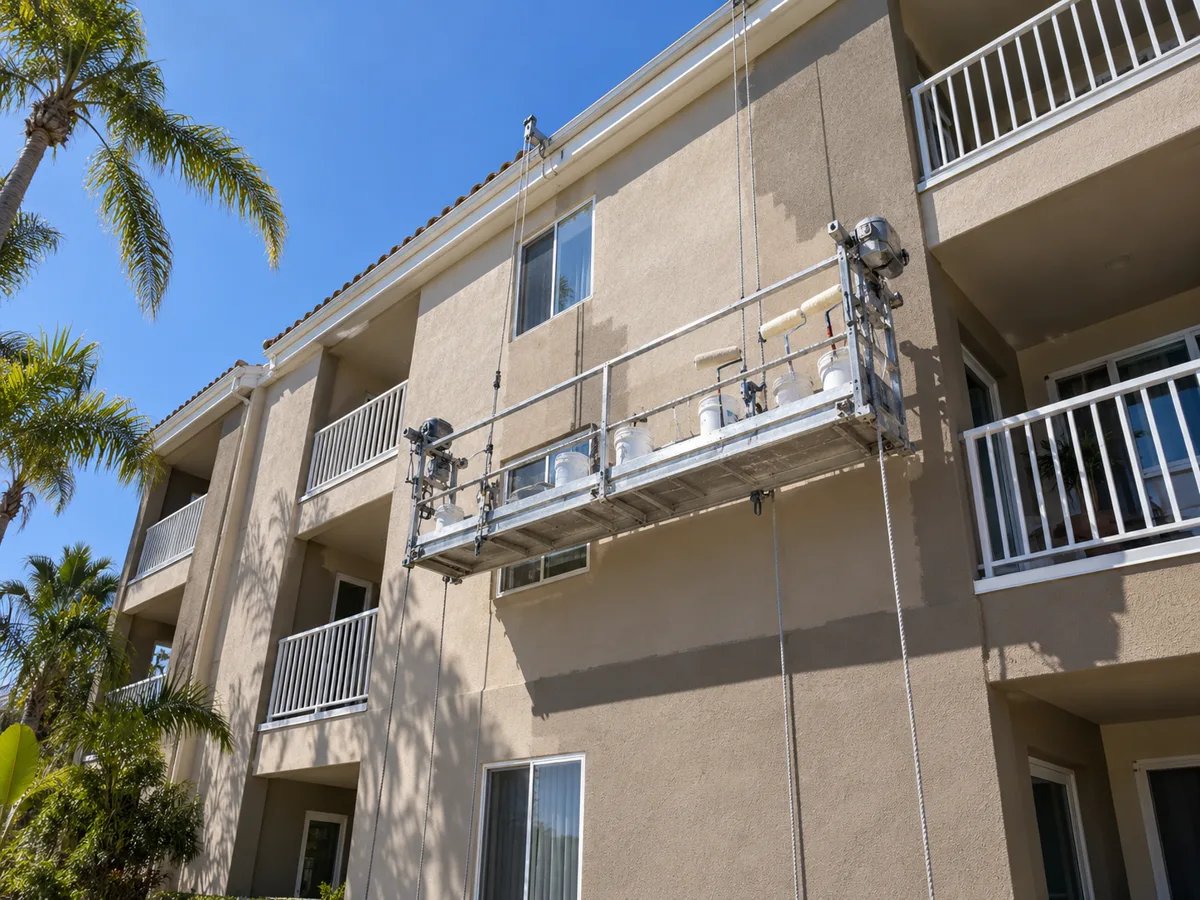
Hairline cracking is very common in new stucco. It is addressed before finish coats so moisture is less likely to get behind the coating.
An alkali-resistant primer separates the stucco from the finish coat, and back rolling after spray pushes the coating into the texture.
The buyer walk is the last paint event on a house. By then a builder has typically handed the house to a buyer's inspection or a final quality check, and every mark on a wall becomes visible under the light of the day.
A punch list is a document listing work that does not conform to the contract and must be corrected before final payment. We treat it as a working tool instead of a verdict: the superintendent or the builder's quality manager walks the house, the items are listed, and we clear them on a set return visit.
We leave a labeled quart of each color with the plan's file so later warranty touch-ups match the walls.
New construction painting is typically estimated at roughly $4,000 to $10,000 per home, and the number moves with the plan rather than with the developer's zip code.
These figures are estimates and are subject to change once we see the plans and the release schedule, and the written bid sets the final price. Send the plan set, the lot count and the schedule and we will price the phase plan by plan.
The process
Four steps, and nothing is painted until you have approved the scope and the colors.
We walk the house or property with you, look at the stucco, the trim and the old coating, and note what the sun, the salt air and the marine layer have done to each side.
You get the prep, the products, the colors and the dates in writing. For an association or a building, the scope is phased so residents and tenants know which day is theirs.
Washing, scraping, patching and caulking come first, because that is what the paint holds on to. Then primer where it is needed and the finish coats.
We walk it again with you before we call it done, and touch up anything you point at.
Also from our crews
Questions
Yes. We take the superintendent's lookahead, staff to it and report progress by lot as primed, finished or touched up, so the paint schedule follows your release schedule and not the other way around.
We price each plan once and repeat it across the lots of that plan. Elevation options and buyer upgrades are separate lines, so a change moves one line and not the whole bid.
After it has cured and the product data allows. We follow the coating manufacturer's guidance on alkalinity and use an alkali-resistant primer, and we do not paint to a calendar date.
It gets a primer coat before finish coats so joints and patched fasteners take the finish evenly, and it is checked for sanding marks before finish coats go on.
We do, on a scheduled return visit after flooring, fixtures and trim. The touch-up uses the plan's approved color schedule, so the repair matches the wall.
Yes. The builder's representative walks the house, we clear the punch list and the house is signed off. The buyer walk is the last paint event on the home.
By a written color schedule for each plan and elevation, tied to the lot map. The crew checks the lot against the schedule before a can is opened.
We re-sequence. Because every plan is scoped and priced separately, moving a lot up or back changes the calendar and not the bid.
Yes. A single custom home or an infill lot is priced the same way, plan by plan, and the plan simply has one lot.
A color schedule by plan, product data for each coating, a certificate of insurance and W-9 with the bid, and labeled leftover paint with the file at closeout.
Homeowners get a free on-site estimate. Boards, managers and contractors can send a scope for a bid.
Licensed, insured and bonded · License #585047. Calls only, we do not receive text messages.