Storefronts and fascia
Entry bands, columns, signage backing and canopies are listed per tenant, with the paint color and sheen from the center's standards.

Carlsbad Expert Painting is a trusted San Diego County specialist in hotel and resort painting in Carlsbad, CA, specializing in phased guest-wing repaints, lobby and corridor refinishing and shopping-center storefronts. We offer occupied-property painting and night-shift repaints for hotel and retail managers.
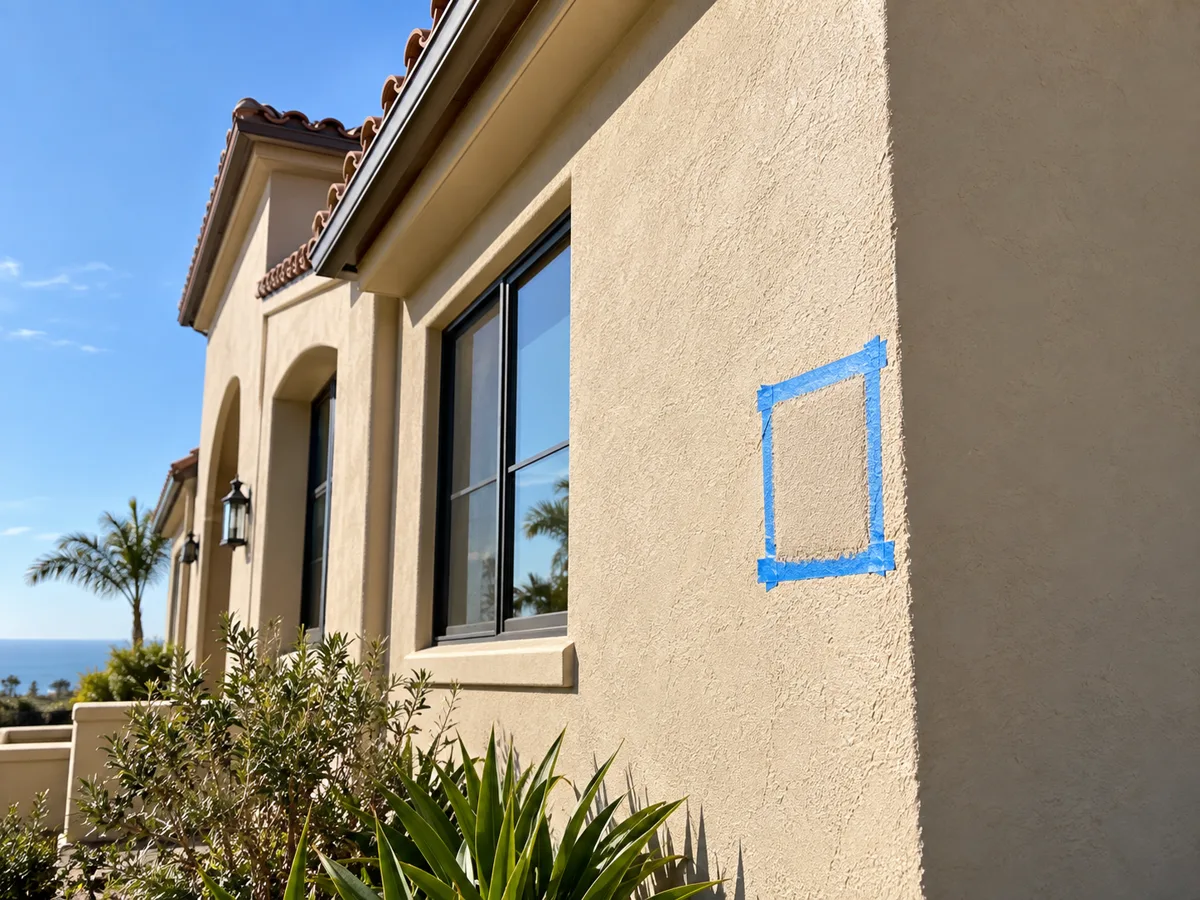
Our team provides low-odor coatings and written quiet-hour plans, delivering finished areas while the property stays open for both residential and commercial projects. We submit product data for approval, paint a mockup area before a phased repaint, and we write the schedule by wing, floor or storefront so the front desk and each tenant know what is coming.
From masking guest doors and wayfinding signs to a punch list walked with your manager, our team handles every detail. Serving Carlsbad, Encinitas, Solana Beach and Del Mar, we plan around check-in rushes, event weekends and every tenant's trading hours.
Why Carlsbad Expert Painting
No salesperson hands you to a stranger. The person who measures the job answers for it.
A hotel is an operating business with a front desk, housekeeping, a restaurant and guests arriving all afternoon. Resort hotels are often built as destinations in themselves, which means guests spend their whole day on the property, not just the night. Every corridor being painted is one a guest might need to use.
So the work is phased by wing or floor, and the phase plan is agreed in writing with the general manager before any equipment arrives. Rooms are handled the way housekeeping already handles them: a wing is released, painted, walked and handed back, then the next one begins.
Carlsbad's coastal resort and tourism trade means these properties trade year-round, so we plan the calendar with the manager's own occupancy view instead of assuming a slow season.
The simplest way to keep wet work away from guests and shoppers is to do it when they are not there. Night and early-morning shifts move rolling and spraying to the hours when a corridor or storefront is empty, and the walls are handed back before the day begins.
The trade-off is honest and we state it in the bid: shifts are shorter, set-up and clean-up happen every night, and the calendar is longer than a daytime job would be. What you get for it is a property that never has a fresh coat next to a full lobby.
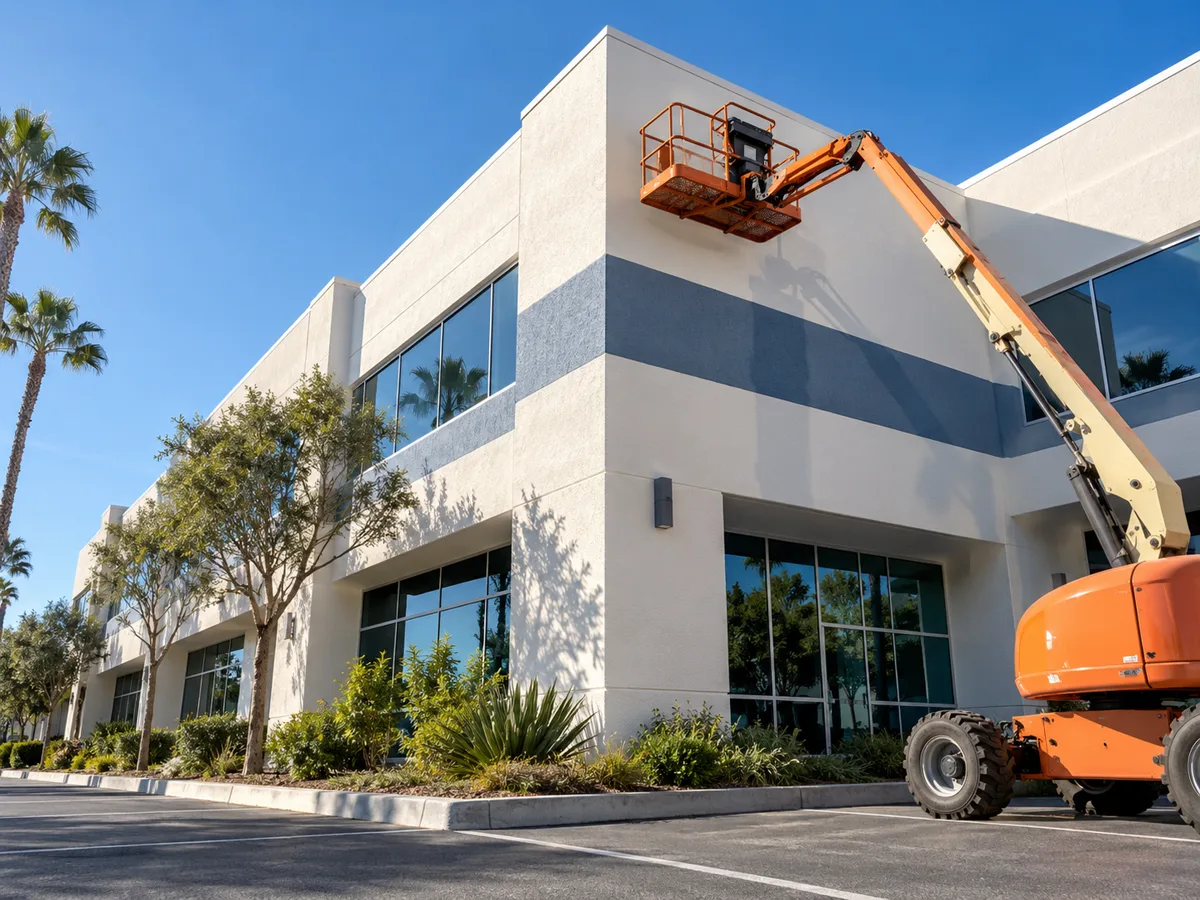
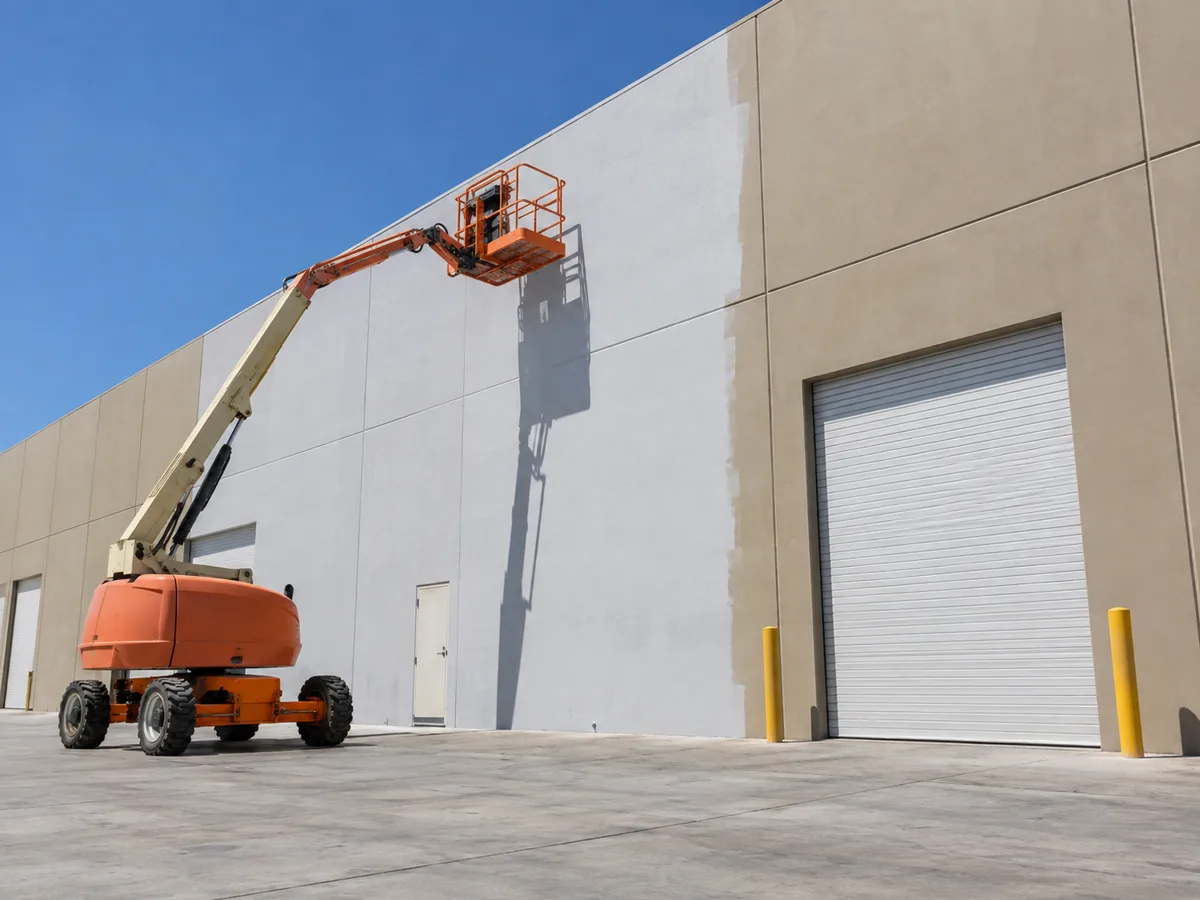
A shopping center is a group of stores with shared walkways and parking, and many centers are anchored by larger stores with smaller stores between them. Open-air outlet centers add another layer, because their tenants draw customers all day, and each storefront is its own business with its own lease. We coordinate the repaint tenant by tenant. The center manager gives us a tenant list with trading hours, sale weekends and grand openings, and we plan each frontage around them. A tenant's opening weekend is not the day its storefront is under lift or scaffold.
Entry bands, columns, signage backing and canopies are listed per tenant, with the paint color and sheen from the center's standards.
Walkways, benches, bollards, trash enclosures and service corridors are scheduled apart from the storefronts, so shared areas are open as much as possible.
Each tenant gets a written notice through the manager listing dates and the equipment in front of its space, and we do not start a frontage until the manager confirms it has been delivered.
Fresh paint is a major source of volatile organic compounds, and indoor levels of those compounds are already consistently higher than outdoors. In a new or freshly refinished space, materials continue to off-gas, and tint adds to it, because each ounce of colorant can carry 5 to 20 grams. Where painted areas share air with guest rooms, dining rooms or open stores, that matters to the people breathing it.
Safety data sheets for every product are kept with the crew and given to the manager on request.
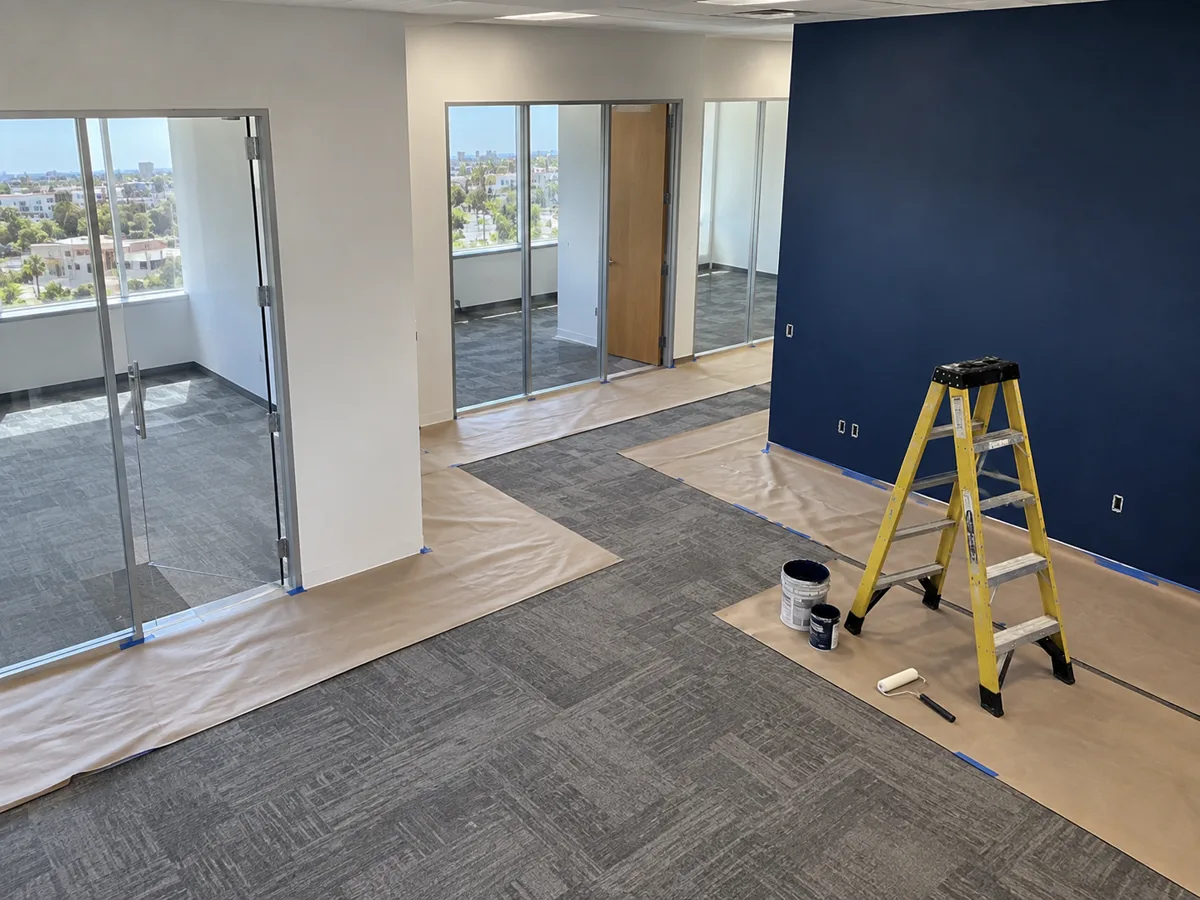
A hotel or resort has three kinds of space, and each is painted on different terms. What guests see decides how the property is rated, what staff see decides how the property runs, and the two rarely need the same schedule.
These are the first things a guest sees and the last things to be handed back late. They are repainted in sections with detours and off-peak shifts, and the finish is chosen for scuffs, since luggage carts and chairs strike the same wall repeatedly.
Rooms are painted as a block released by housekeeping, with a color and sheen from the brand standard. Paint is one line in a refresh that may also include flooring and soft goods, so we work to the refresh calendar the manager already holds.
Service corridors, kitchens, laundry, loading areas, pool decks and exterior walls are scheduled in the gaps between the guest-facing work, with equipment kept off routes that deliveries and staff depend on. Higher-sheen coatings look richer and also highlight surface defects, so we discuss the sheen for each area with the manager instead of defaulting to one product throughout.
Hotel, resort and retail painting is typically estimated at roughly $30,000 to $250,000 per contract, a budgetary range from painting trade data rather than a number for your property. The bid is built from the property and its calendar.
Send the floor plans, the room or storefront count and your brand color standards for a bid. Those figures are estimates, they are subject to change once the property has been walked, and the written quote sets the final price.
The process
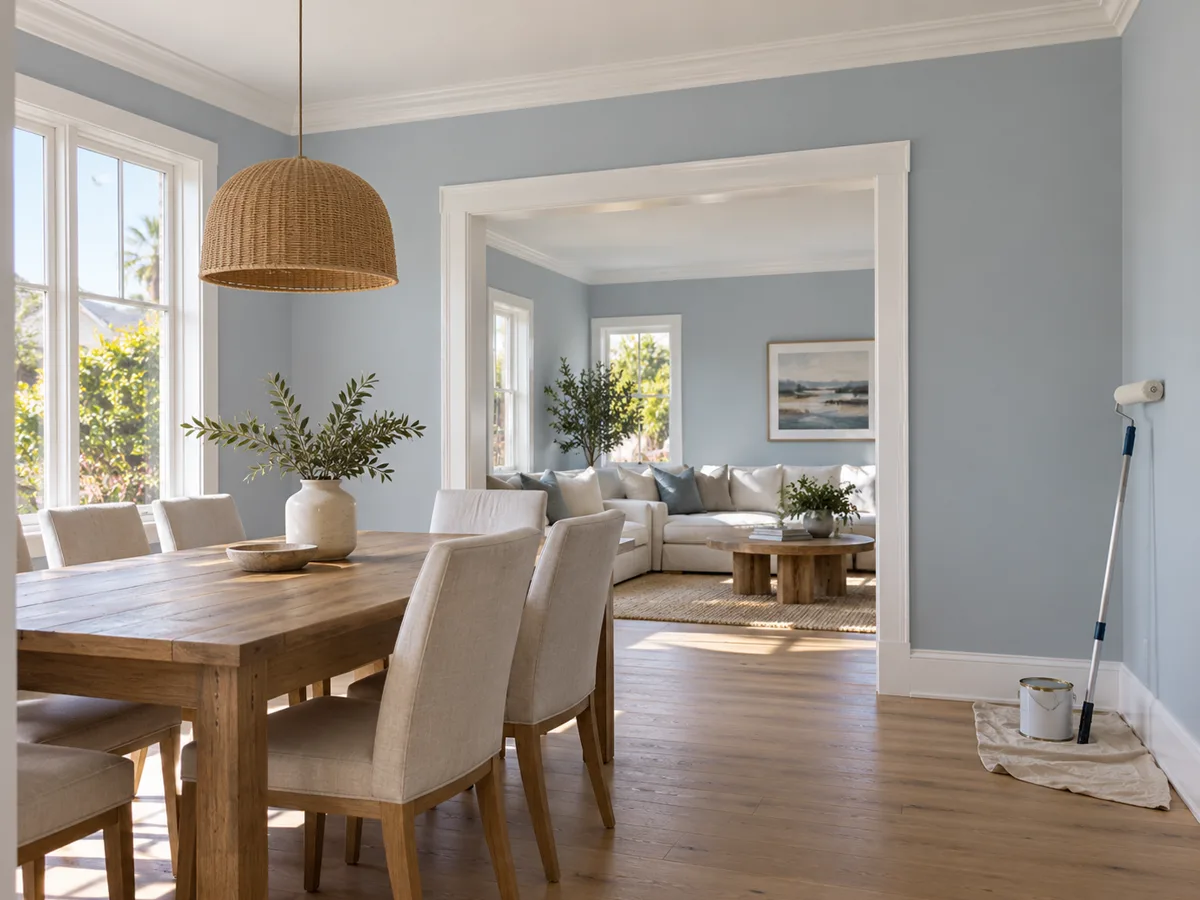
Four steps, and nothing is painted until you have approved the scope and the colors.
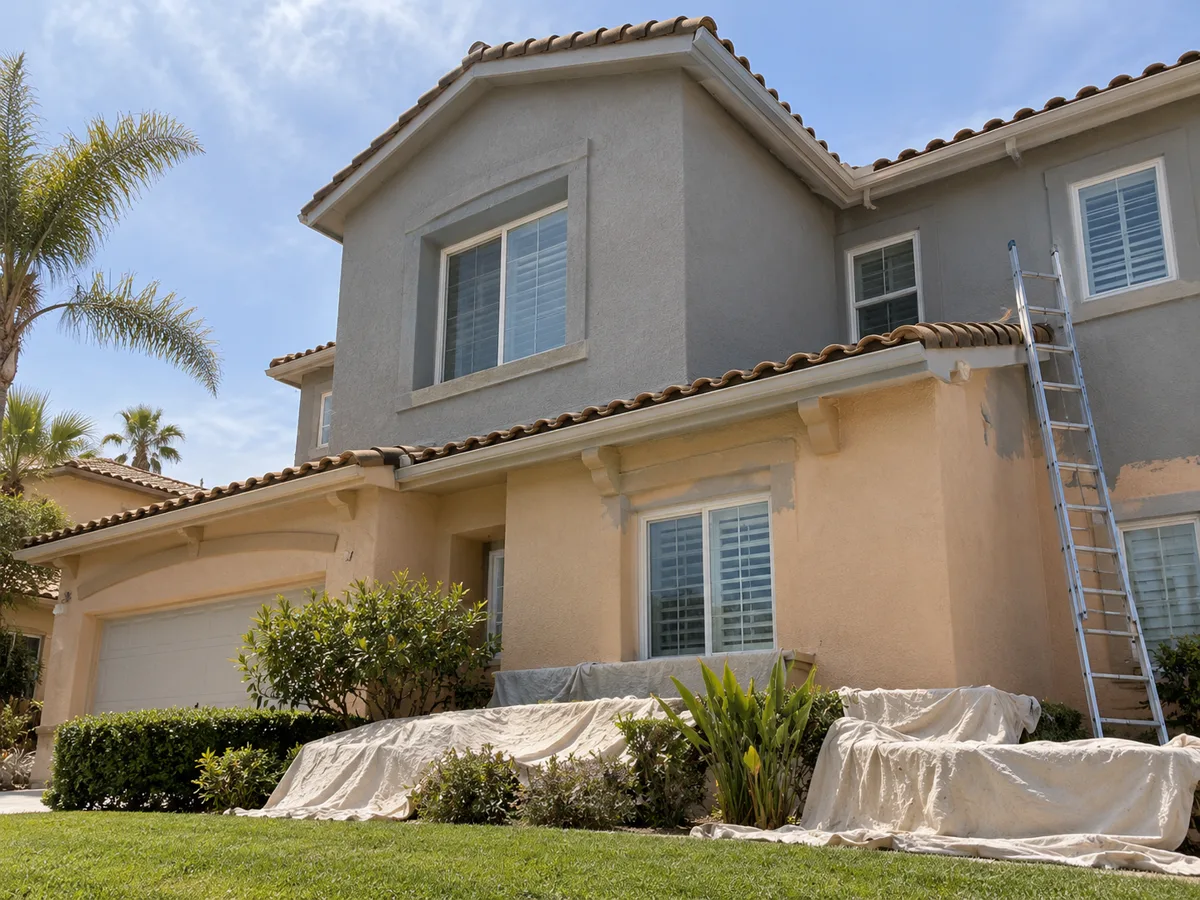
We walk the house or property with you, look at the stucco, the trim and the old coating, and note what the sun, the salt air and the marine layer have done to each side.
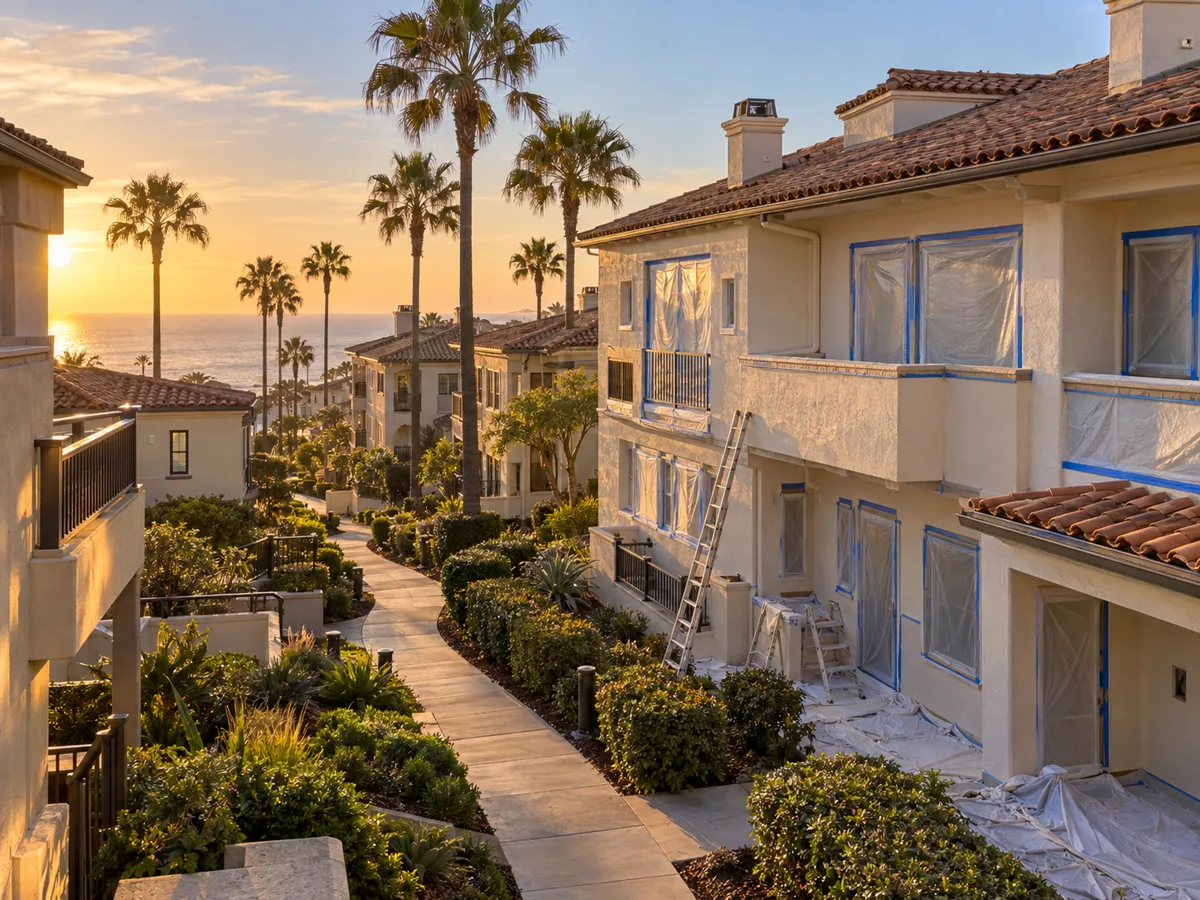
You get the prep, the products, the colors and the dates in writing. For an association or a building, the scope is phased so residents and tenants know which day is theirs.
Washing, scraping, patching and caulking come first, because that is what the paint holds on to. Then primer where it is needed and the finish coats.
We walk it again with you before we call it done, and touch up anything you point at.
Also from our crews
Questions
Yes, by phasing. A wing or floor is released, painted, walked and handed back, so the rest of the property keeps operating. The general manager approves the phase plan in writing first.
We use low-odor products, contain the work area, agree fan and door control with engineering, and move wet work to night or early-morning shifts where the layout allows.
They change the bid, because set-up and clean-up repeat every shift and the calendar is longer. The bid states after-hours work as its own line so you can compare it.
Yes. Send the event calendar and busy periods, and the quiet hours are written into the plan so painting is kept off those windows.
Through the center manager. Each tenant gets a written notice with dates and equipment in front of its space, and grand openings and sale weekends are protected on the calendar.
Yes. Wayfinding signs, alarm devices and sprinkler heads are masked or covered, never painted over, and reinspected at the punch list.
Yes. We match to your standards or existing walls, brush out a sample for approval, and record the product, color and sheen for later touch-ups.
Yes, in phases that fit the outlet's hours. Containment and low-odor products matter most there, and the schedule is set with the outlet manager.
Yes, in sections scheduled around guest use, with equipment kept off routes that guests, staff and deliveries need. Surfaces around water are listed as their own lines in the bid.
Yes. We work to the refresh calendar the manager holds, and paint takes its slot beside flooring and other trades so a room is never held up by us or waiting on us.
Homeowners get a free on-site estimate. Boards, managers and contractors can send a scope for a bid.
Licensed, insured and bonded · License #585047. Calls only, we do not receive text messages.