Fancy butts
Gable shingles cut in diamond, octagonal or fish-scale patterns are brushed pattern by pattern, because a sprayer cannot get into the shapes without leaving heavy edges.

Carlsbad Expert Painting is a leading San Diego County specialist in shingle siding painting in Carlsbad, CA, specializing in western red cedar shingles, split cedar shakes and fancy-butt gable shingles. We offer semitransparent and solid-color staining for shingle walls.
Our team provides stain-blocking primer under every painted course, delivering painting that holds its color over cedar's natural extractives for both residential and commercial projects. We sample the stain or paint on a few of your own shingles before any painting is ordered, and the same crew that washes the wall brushes it from a written scope.
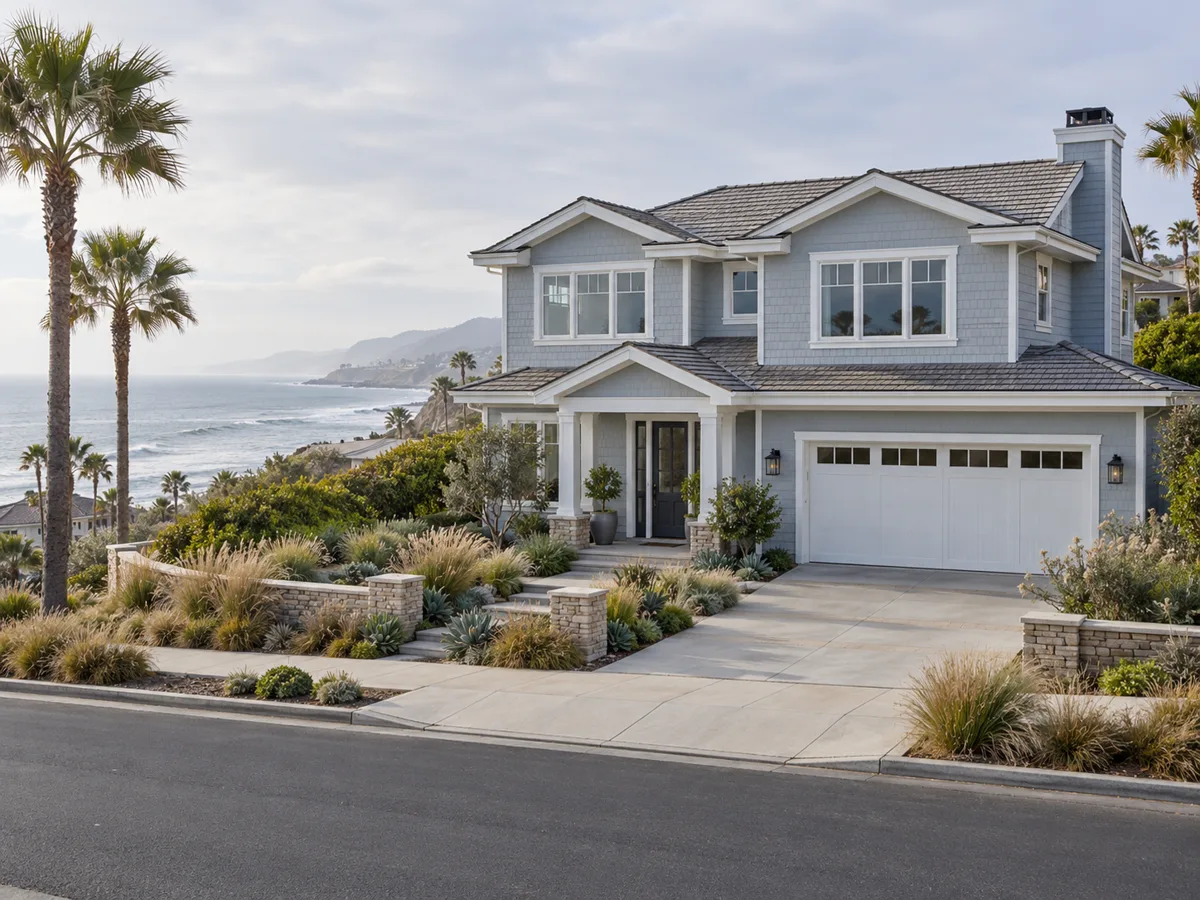
From a gentle wash of a gray gable to the last brushed course on a shingled beach cottage wall, our team handles every detail. Serving Carlsbad, Encinitas, Solana Beach and Del Mar, we finish shingle walls without damaging them.
Why Carlsbad Expert Painting
No salesperson hands you to a stranger. The person who measures the job answers for it.
Modern shingles are mostly cut, and shakes are split out of a bolt. Both are used to side buildings, and lower grades are the ones usually seen on walls. North American shingles are typically western red cedar or California redwood, and both weather from warm brown to silver gray. The gaps between shingles are not flaws. Flat-grain shingles and shakes shrink and swell almost twice as much as vertical-grain ones, so they are installed with room to move, about an eighth to a quarter inch between shingles and about three eighths of an inch between shakes. Paint or caulk that bridges those gaps will crack the first time the wood swells. We leave every gap open, and we paint the face of each course without filling the joint.
Gable shingles cut in diamond, octagonal or fish-scale patterns are brushed pattern by pattern, because a sprayer cannot get into the shapes without leaving heavy edges.
Cedar extractives stain fasteners that are not corrosion-resistant. Electro-galvanized nails can let moisture through the shingle and rust, and the rust bleeds through any crack in the paint on the nail head. Those nails are countersunk and treated before finishing.
A gray shingle wall is not dirty, it is weathered. The loose gray surface is what a film finish will not hold to, so that layer has to come off before anything is put on. Mildew and algae are a separate matter: they feed on airborne contaminants and do not eat the wood, but they show as black or green blotches and have to be cleaned first.
Carlsbad's cool foggy summers make that drying step matter, since a shingle wall on a shaded side can stay damp longer. We check the wall before the first coat is opened, and we do not stack coats on wood that still holds water.
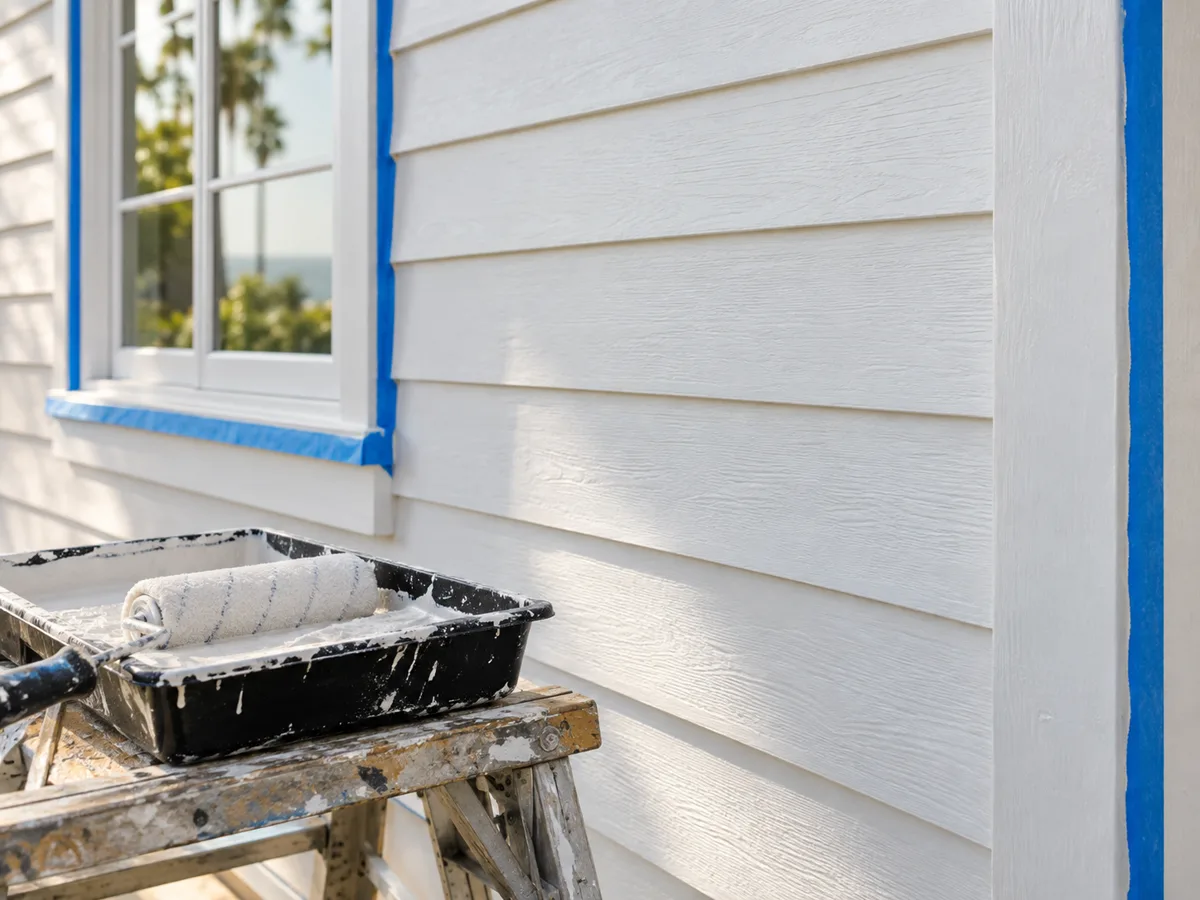
Three finishes suit a shingle wall, and each does a different job.
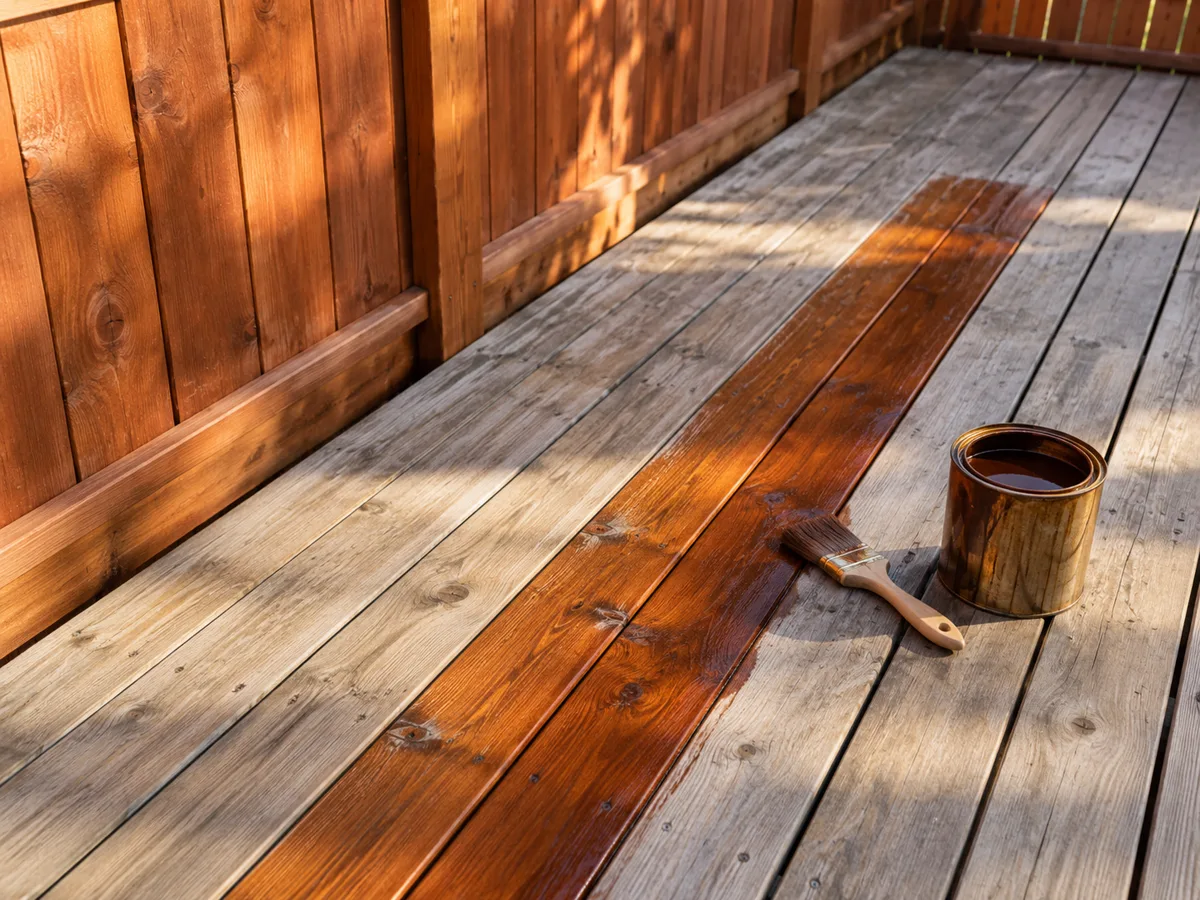
It is porous and forms no surface film, so it cannot blister or peel. It shows the grain and the cedar tone. The catch is lap marks: where one course overlaps another, the stain shows a darker line if it is not applied carefully. So we brush a course at a time, wet edge to wet edge.
It gives more UV protection than a semitransparent stain and performs best on textured surfaces such as shingles. It needs a stain-blocking primer on extractive woods like cedar, and it should not be used on weathered surfaces, which is why the cleaning step comes first.
An acrylic latex topcoat over a stain-blocking primer gives the best protection against water and weathering. Paint will not adhere to a weathered surface, so the wall is cleaned and primed. It is the most work and the biggest change in appearance. Transparent film finishes such as urethane varnish, lacquer and shellac are not recommended outdoors, so they are not on the menu.
Cedar carries water-soluble extractives. Under a light or white finish they can rise to the surface as tan or brown blotches, which is why a fresh coat of paint on cedar can look stained within a season.
The answer is a stain-blocking primer applied to the wall before any solid-color stain or paint, so the extractives are held back. For a new color, we run a test on a few of your shingles first. If the sample bleeds through, we go up a level on the primer before the color is ordered. That step costs time on the walk and saves you a repaint.
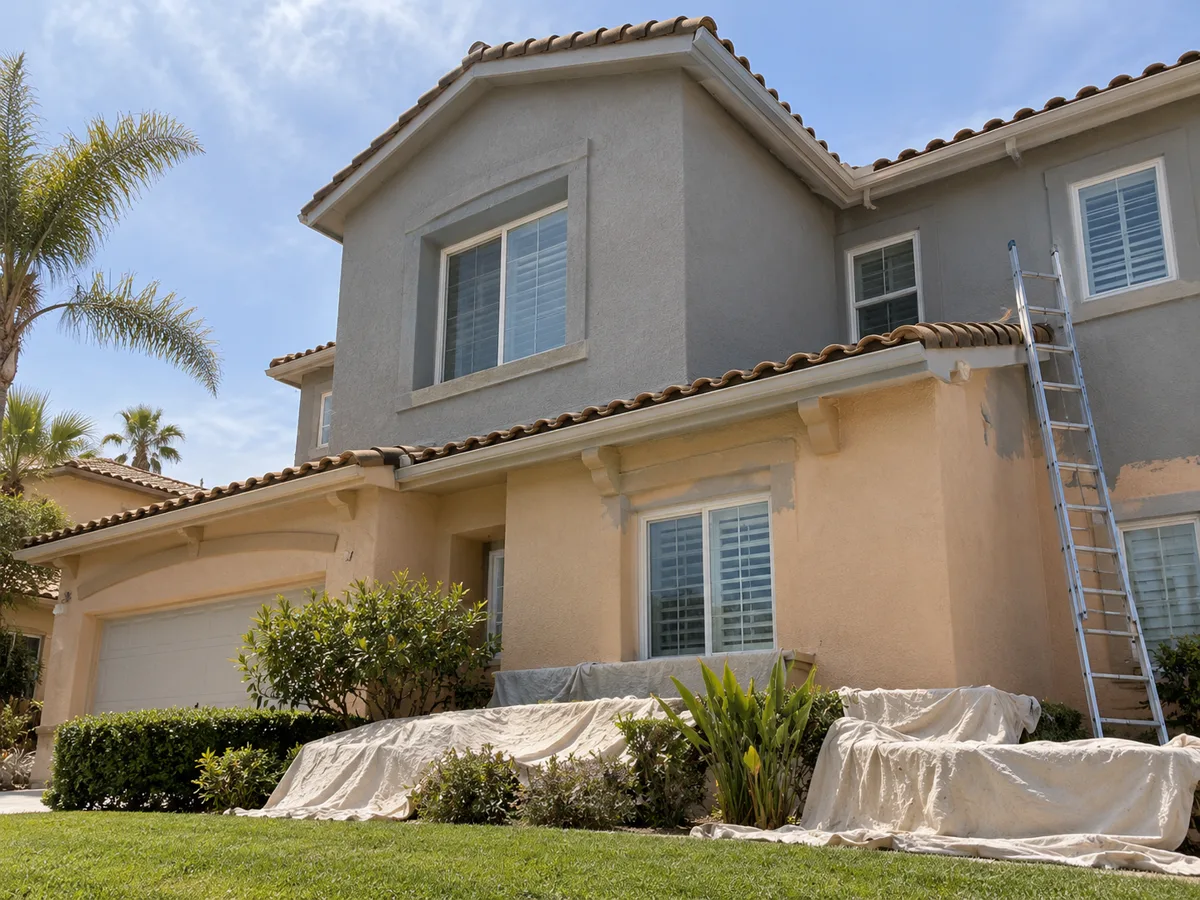
Many Carlsbad homes have shingles only on gables or accent walls above stucco. Those walls are finished separately from the stucco, with their own scope line. For association boards and multi-building properties, we submit product data, paint a mockup on one gable for approval, and schedule by building. Send the building count or the reserve study and we will build the bid.
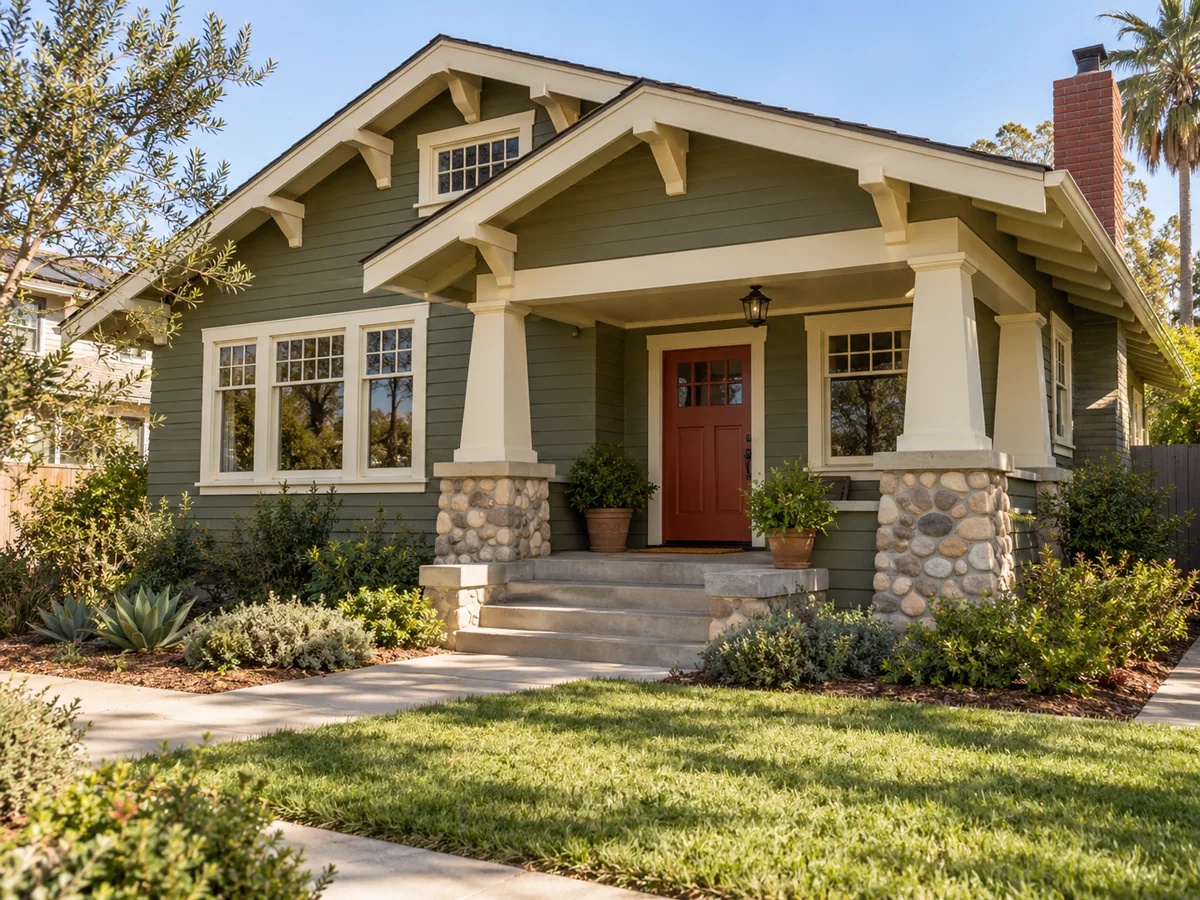
The process
We inspect each course, note loose, split and rusted-nail shingles, and brush test patches of the proposed stain or paint on your own wall.
Damaged shingles are replaced with matching cuts, and fasteners that stain are countersunk and treated.
Mildew is treated with a diluted cleaner, weathered gray is washed off with the nozzle pointed down, and the wall is rinsed.
The wall is left until the wood has dried out, with no coat applied over moisture.
Painted and solid-stained walls take a stain-blocking primer against cedar extractives.
Stain or paint is brushed a course at a time, gaps left open, and the wall is walked with you when it is done.
Shingle siding painting in Carlsbad is typically estimated at roughly $1.50 to $4 per square foot of wall, which reflects a national cost guide for exterior painting of cedar siding. The drivers that move a job around inside that range:
These numbers are estimates and can change after the wall is tested. Once the wall has been walked, the written quote is what sets the final price.
Questions
Semitransparent stain keeps the grain and cannot peel. Solid-color stain adds more UV protection, and paint gives the most protection and the biggest color change. We recommend one after seeing the wall.
No. The gaps let the wood move as it swells and shrinks, and a caulked joint would crack. We finish the face of each course and leave the joints open.
Carefully. Washing is done with the nozzle pointed down so water is not forced behind the siding, and the wall is left to dry before any finish.
By working in small sections that end on a natural break, brushing each course from wet edge to wet edge, and never leaving a half-coated course to dry overnight.
Cedar carries water-soluble extractives that rise through a light finish. A stain-blocking primer under the color holds them back.
Yes. Split, missing or rusted-through shingles are replaced with matching cuts, so the finish goes onto a sound wall.
Darker lines where one course overlaps the next. They come from applying semitransparent stain unevenly, and we brush a course at a time to avoid them.
No. This page is about cedar shingles and shakes on walls, gables and accent areas.
It is typically estimated at roughly $1.50 to $4 per square foot of wall, depending on cleaning, finish and primer. Your written quote sets the final price.
Homeowners get a free on-site estimate. Boards, managers and contractors can send a scope for a bid.
Licensed, insured and bonded · License #585047. Calls only, we do not receive text messages.