Offices and conference rooms
Flat or matte walls in rooms with strong window light, because flat paint hides minor drywall flaws better than any shinier sheen.

Carlsbad Expert Painting is a trusted San Diego County subcontractor for tenant improvement painting in Carlsbad, CA, specializing in new-drywall suites, second-generation office repaints and medical and life-science suite finishes. We offer suite painting for general contractors and low-odor work on occupied floors.
Our team provides finish coats that follow drywall sign-off and precede flooring, delivering a closeout-ready suite for both residential and commercial projects. We submit product data for each coating before work starts, and the crew that paints your suite walks the punch list with the superintendent before turnover.
From priming freshly sanded partitions to a last touch-up after casework and ceiling tile go in, our team handles every detail. Serving Carlsbad, Encinitas, Solana Beach and Del Mar, we build the painting schedule around the GC's calendar and each building's rules on work hours.
Why Carlsbad Expert Painting
No salesperson hands you to a stranger. The person who measures the job answers for it.
A tenant improvement is the build-out of leased space to suit a tenant, and landlords often fund part of it as an inducement to sign or renew a lease. The painting sub inherits the schedule pressure of everyone ahead of it. Framing, mechanical and electrical rough-in, and drywall all have to finish before the first coat, and the tenant's move-in date does not move because they ran late.
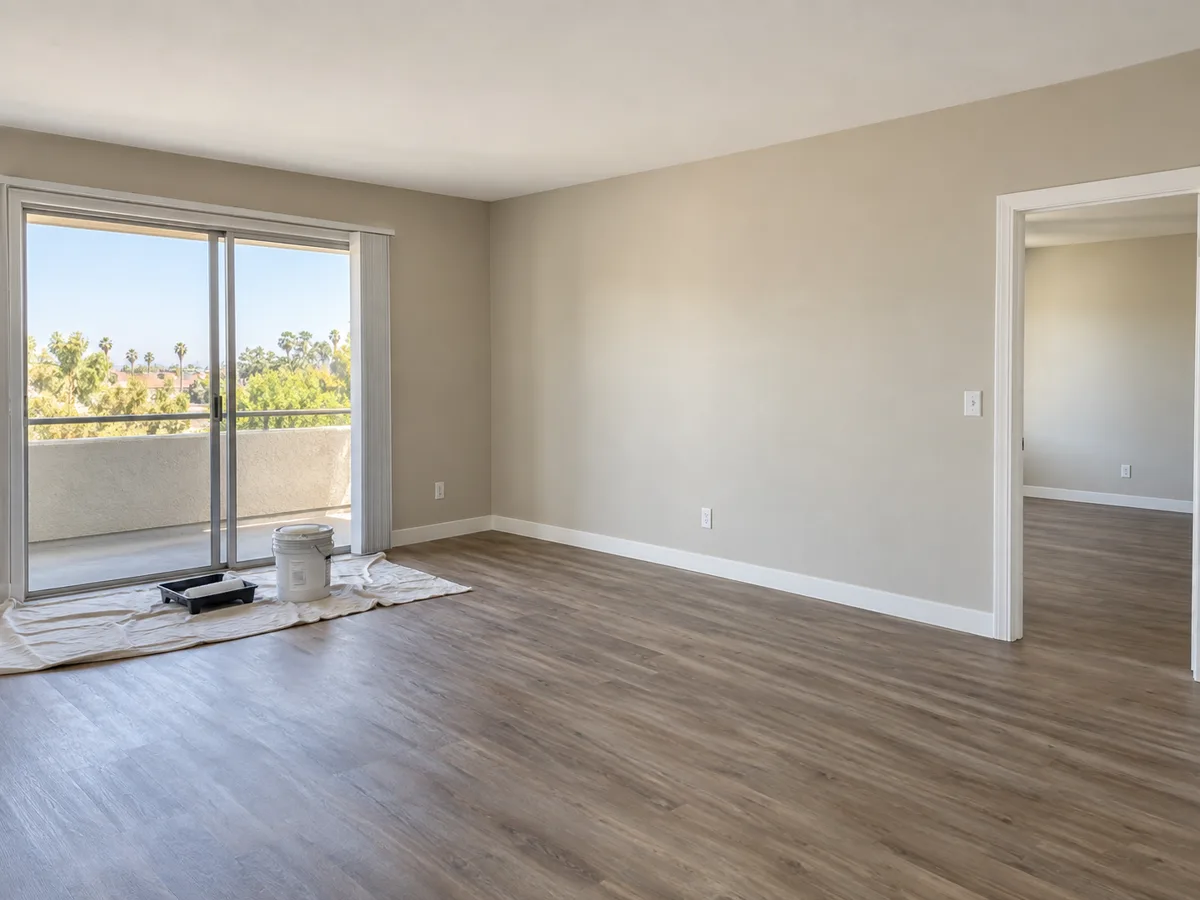
Paint follows drywall finishing and sanding, and it comes in two visits. The first covers primer and finish coats on walls and ceilings before flooring, casework and fixtures arrive. The second is a touch-up pass after those trades leave, because every trade behind paint marks something. A sub who plans only the first visit is the reason punch lists run long.
We tie our start to the GC's drywall sign-off, not to a calendar guess. In the bid each visit is a line with the trigger that releases it, for example sanding complete and the suite swept, so the crew arrives when the walls are ready.
Many suites are built out inside a multi-tenant building where neighbors are still at their desks. In that setting the smell of a fresh coat becomes the neighbor's complaint and the property manager's phone call. Indoor levels of volatile organic compounds are consistently higher than outdoors, and newly finished buildings off-gas from fresh materials, so product choice and working hours are settled before the first gallon is opened.
Our submittals include product data and safety data sheets, so the GC and the property manager can see what is going onto the walls before it does.
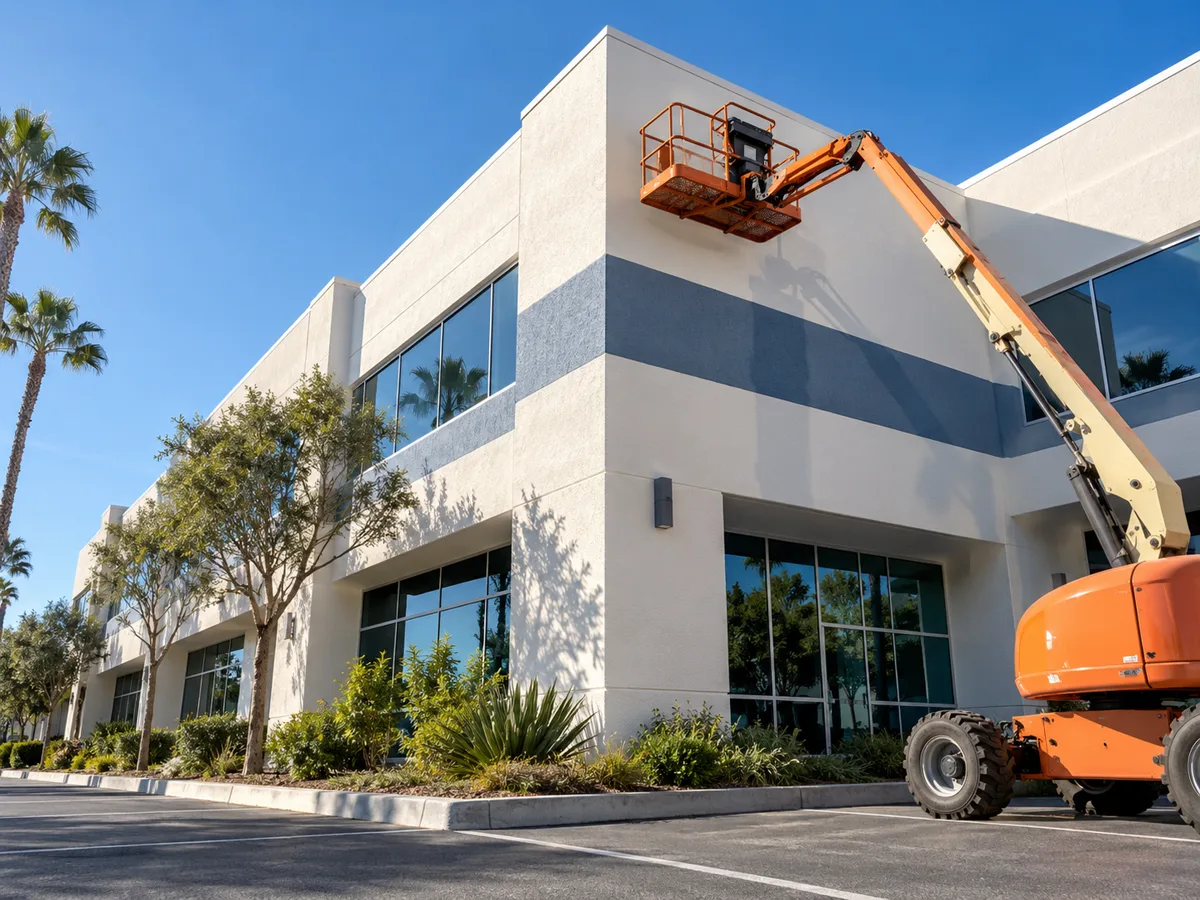
Carlsbad's employer base runs from technology and life-science companies to manufacturers, so the suites we are asked about differ in how hard the walls will be cleaned, and the finish schedule reflects it. We paint what the drawings and finish schedule specify and flag anything that looks mismatched before the first coat.
Flat or matte walls in rooms with strong window light, because flat paint hides minor drywall flaws better than any shinier sheen.
Eggshell or satin where carts, chairs and coffee meet the wall, since both sheens wash far better than flat.
Exam and procedure rooms usually call for a washable sheen, and the clinic or designer sets the product. We submit its data sheet for approval first and paint to the specification.
Where a suite has lab benches, hoods or controlled rooms, the finish schedule governs, and questions about a specialty coating go to the design team through the GC as a request for information rather than being guessed at on site.
Hollow metal frames and doors take a higher-sheen enamel. Deep accent colors are scheduled early because their extra coats should not hold up the rest of the suite.
New drywall is finished to a numbered level, from Level 0, not finished in any fashion, to Level 5, the most pristine, and joint compound is spread, dried and sanded before paint. The level is set in the specifications by the architect, not chosen by the painter, but it decides what the finished wall looks like.
A glossier sheen and strong side light both make seams easier to see. When a finish schedule pairs a higher sheen with a wall level that will telegraph joints, we raise it as a question during submittals, not after the first coat. We also prime drywall before the finish coats, because priming and painting are recommended wherever drywall will see wear.
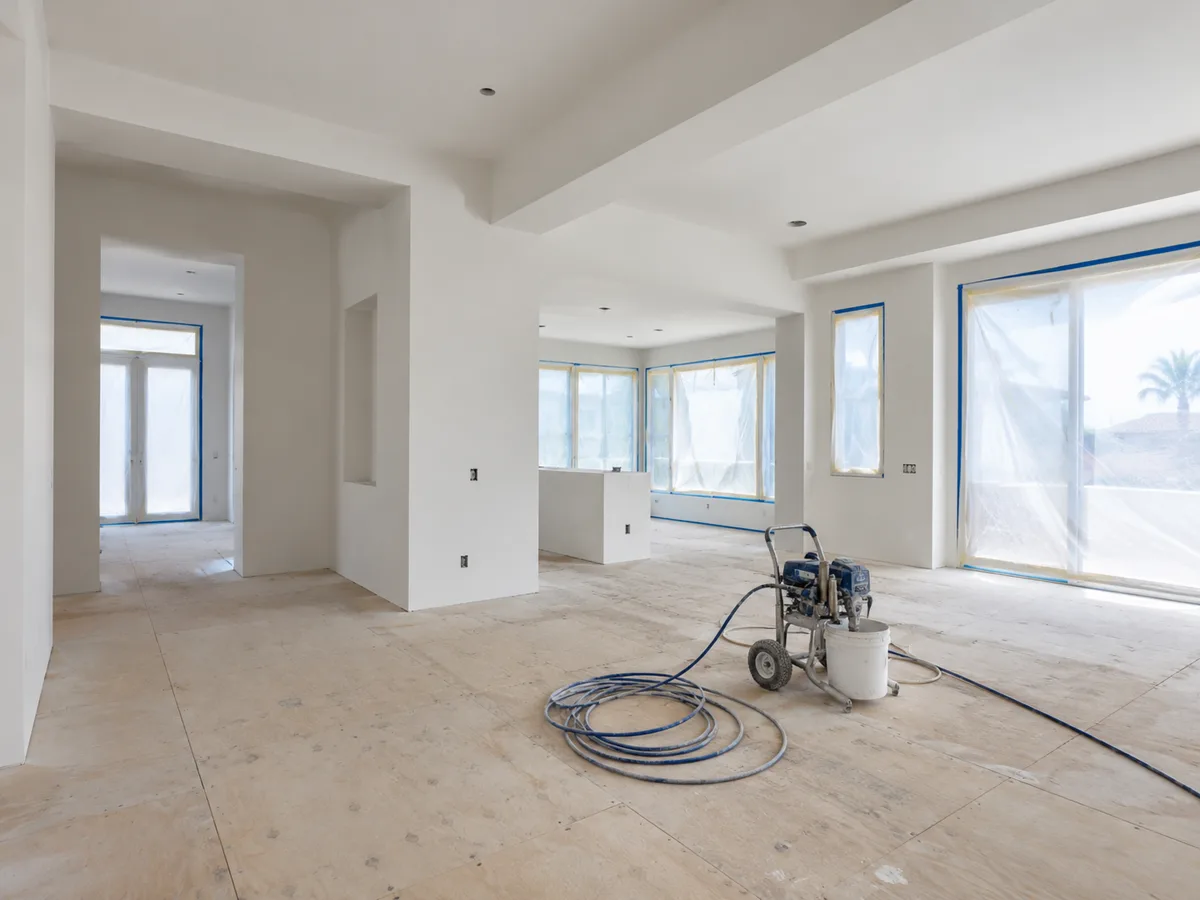
On a tenant improvement the painter answers to two parties who want different things. The general contractor wants the suite finished on the construction schedule. The property manager wants the building's other tenants undisturbed. We keep both informed through one line of communication, so nobody hears about a change secondhand.
Where a delay lands on us, the bid says how remobilizing is handled, and where it lands on another trade, the note says so without blame. Painters usually get compressed at the end of a schedule, and a clear record is what keeps a compressed schedule workable.
A painting package is finished when the GC holds what the owner needs to maintain the suite. Closeout is written into our bid as its own line.
Office and tenant improvement painting is typically estimated at roughly $15,000 to $100,000 per contract, a budgetary range from painting trade data rather than a number for your suite. The bid itself is built from your drawings.
Send the plans, the finish schedule and the construction schedule for a bid. Those figures are estimates, they are subject to change as the drawings are revised, and the written quote sets the final price.
The process
Four steps, and nothing is painted until you have approved the scope and the colors.
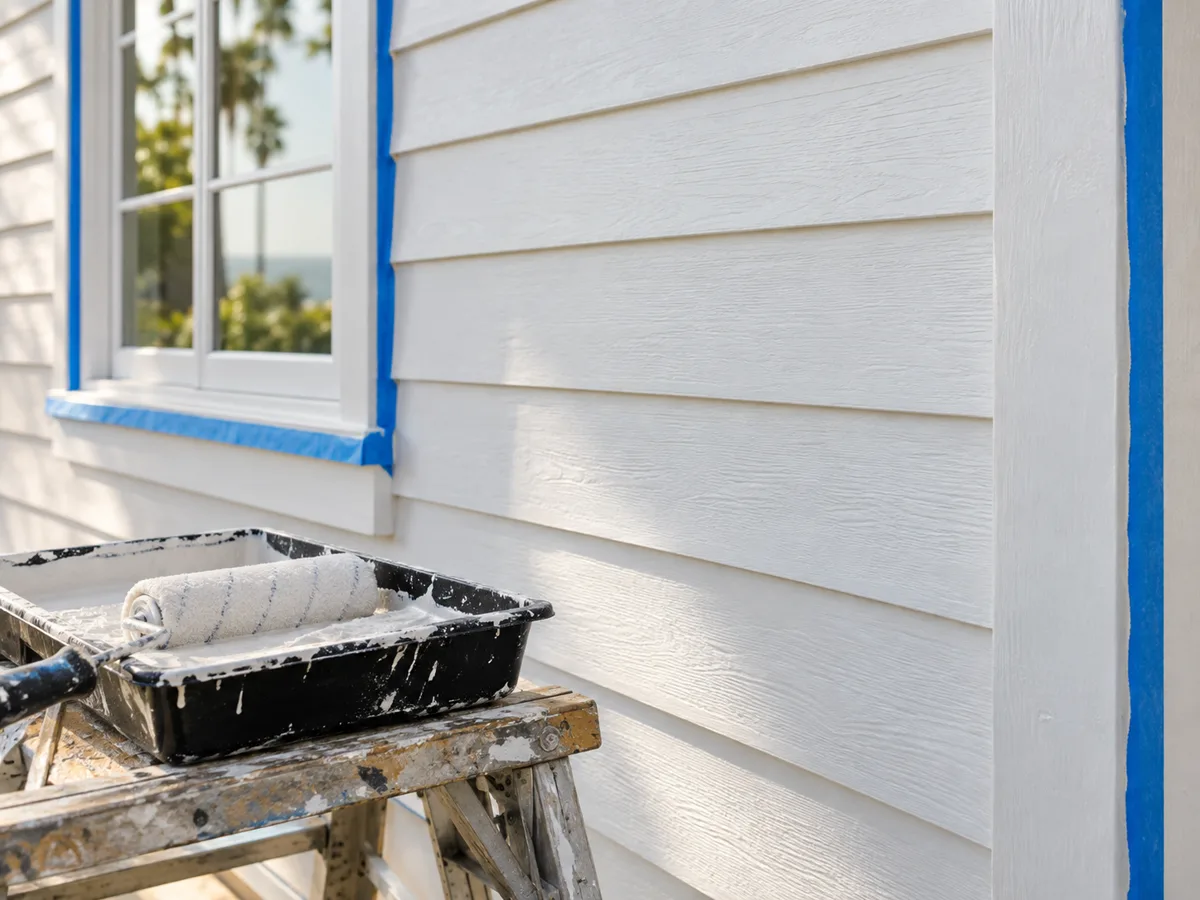
We walk the house or property with you, look at the stucco, the trim and the old coating, and note what the sun, the salt air and the marine layer have done to each side.
You get the prep, the products, the colors and the dates in writing. For an association or a building, the scope is phased so residents and tenants know which day is theirs.
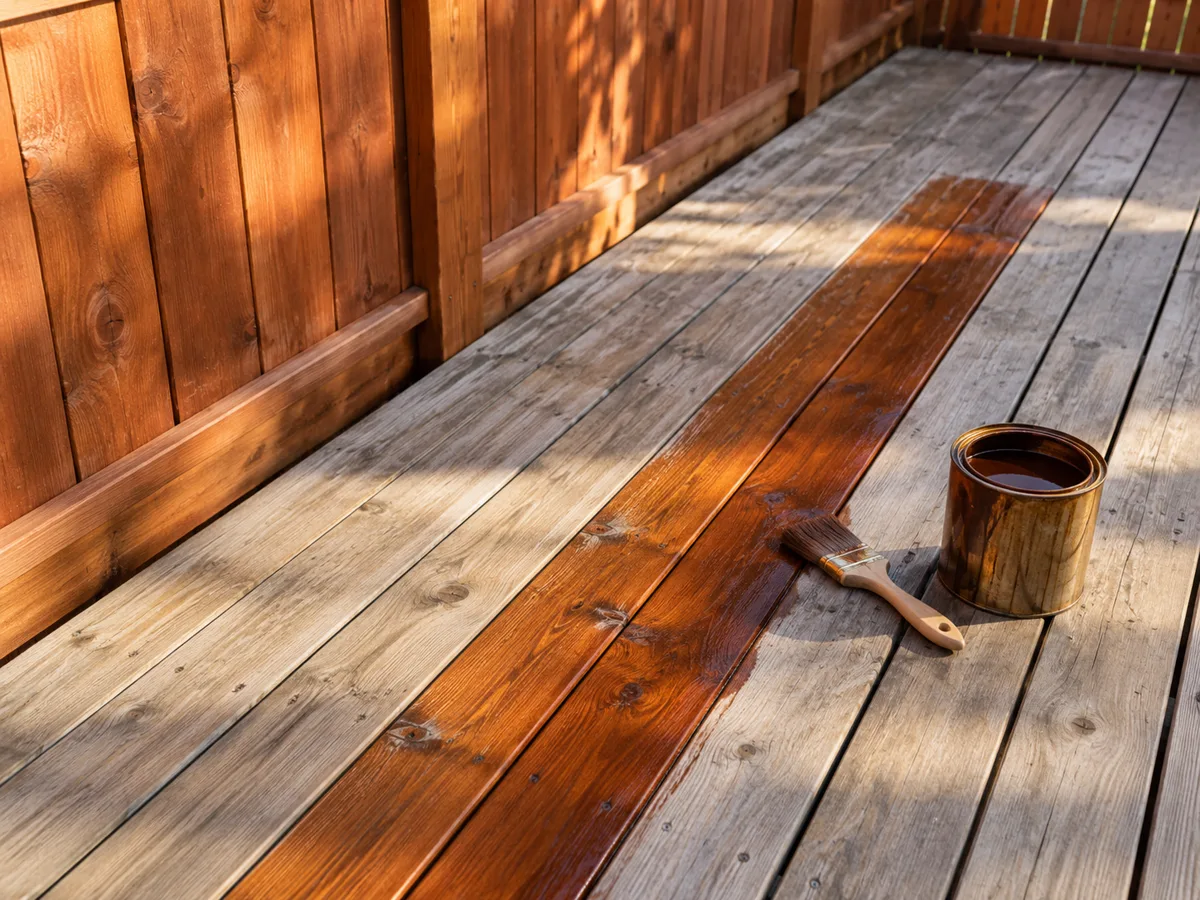
Washing, scraping, patching and caulking come first, because that is what the paint holds on to. Then primer where it is needed and the finish coats.
We walk it again with you before we call it done, and touch up anything you point at.
Also from our crews
Questions
Yes. The takeoff is built room by room from the drawings and finish schedule, and we add a site visit when the suite is a second-generation space with existing walls to repair.
Yes, where the building's rules allow it. Evening and weekend painting is written into the bid for shared corridors and walls beside occupied suites, with hours agreed with the GC and the property manager.
Yes. We submit them for approval before work and put a copy in the closeout package with the product list.
Yes, in the quantity the specifications call for, labeled with the color, product and rooms it was used in.
We do, as a scheduled visit in the bid. The superintendent calls it once those trades are out, and the crew that painted the suite does the touch-up.
Yes. A second-generation suite gets its old partition scars patched and primed, then it is painted to the new finish schedule like a new one.
That is the reason for tying each visit to a trigger, such as drywall sign-off. When the GC's dates move, our start moves with them through the superintendent, and the bid says how remobilizing is handled.
We paint to the specified product and submit its data sheet for approval. If a coating question is open, we send it to the design team as an RFI through the GC.
Yes. Where the architect or designer asks for them, drawdowns or brushed-out samples go in with the product data, and we do not order material for a room until its color is approved.
We collect them from the property manager before the first mobilization and build them into the schedule, so materials move on the building's terms and not on ours.
Homeowners get a free on-site estimate. Boards, managers and contractors can send a scope for a bid.
Licensed, insured and bonded · License #585047. Calls only, we do not receive text messages.